Parts of Grade II listed Ripple Hall date back from the 1400s with a front elevation added in the 18th century and later Victorian additions.
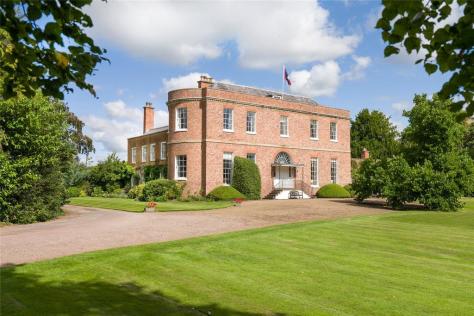
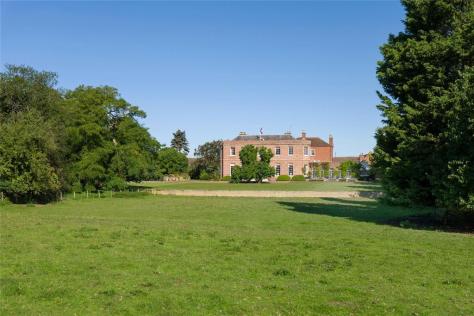
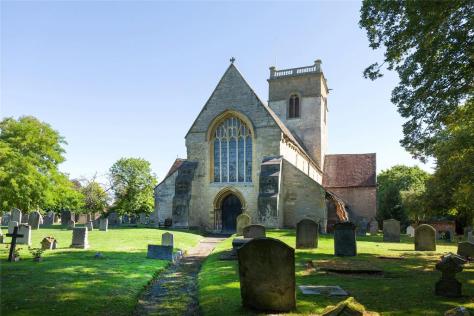
Ripple Hall, Ripple, Worcestershire. The house is situated in a conservation area next to the Grade I listed, 12th Century St Mary’s Church. Image: Andrew Grant.
The house appears to have been rebuilt about 1780-1790 for Fleetwood Parkhurst, who died in 1801, and whose widow, Anne, stayed on until 1818. Parkhust was descended from Bishop Parkhurst, the celebrated author of the Hebrew and English Lexicon.
His son, also named Fleetwood, was a Rugby and Oxford contemporary of Walter Savage Landor, the writer, poet and activist, a regular visitor to the house during his parent’s time. It appears that while affection grew between Landor and the old squire, he did not always hit it off with the son.
The son, Fleetwood Parkhurst, was a clergyman and became Rector of Epsom as well as a man of property. He retired to Ripple Hall but died in 1844 while walking in Cheltenham after ‘a visitation from God’. In a letter from Landor, his opinion of his old companion was not altogether favourable. “I am shocked and grieved at his death. A happier one, however, there could not be.”
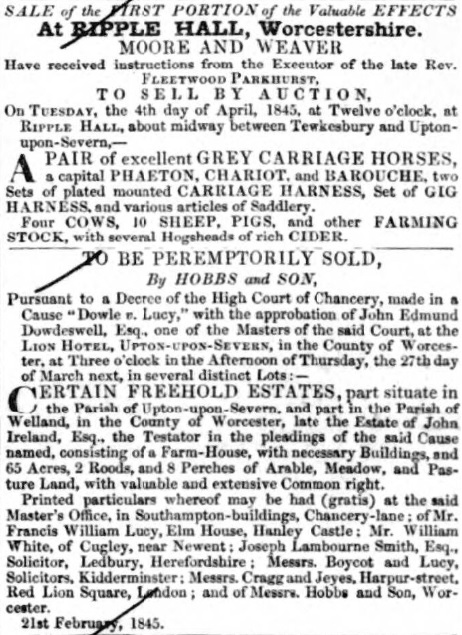
From the Gloucestershire Chronicle in March 1845. The sale of the first portion of valuable effects belonging to the Rev Fleetwood Parkhurst. Image: The British Newspaper Archive.Ripple Hall, Ripple, Worcestershire. The property is of such significance that it is noted in Pevsner’s ‘The Buildings of England’. Image: Andrew Grant.
In 1847, the house was occupied by John Christopher Dowdeswell, a barrister-at-law, the second son of John Edmund Dowdeswell, a Senior Master of the High Court of Chancery. It is possible that Dowdeswell had tenanted Ripple Hall. He died three years later, in 1850, but the house had been in the hands of John William Empson since 1848.
Empson, also of Yokefleet Hall, Howden, was a large landowner in the East Riding of Yorkshire and a Justice of the Peace. He died in 1893 but had spent considerably more time in Yorkshire than in Worcestershire. In 1887, the house appears to have been tenanted by another Dowdeswell, this time Arthur Christopher Dowdeswell. Empson’s wife, Ellen Georgina, long since removed from Ripple Hall, died at Kiltermain In Ireland in 1908.
At the turn of the 20th century, Ripple Hall was in the hands of his widow, Ellen Georgina Empson, but she appears to have been living at Kiltermain in Ireland. The house was briefly occupied by Captain Freeman and afterwards by John Ripley. It was sold in 1907, a year before Ellen Empson died.
The new owner of Ripple Hall was Miss A. J. Behrens, who remained until 1931. It passed to Edward F. Gray, the son of the Reverend Edward Gray of Wembley Park, Middlesex, and Donnington Hall at Ledbury. He had been educated at Haileybury and Oriel College, Oxford, and was in the Consular service for thirty years before retiring to Ripple Hall.
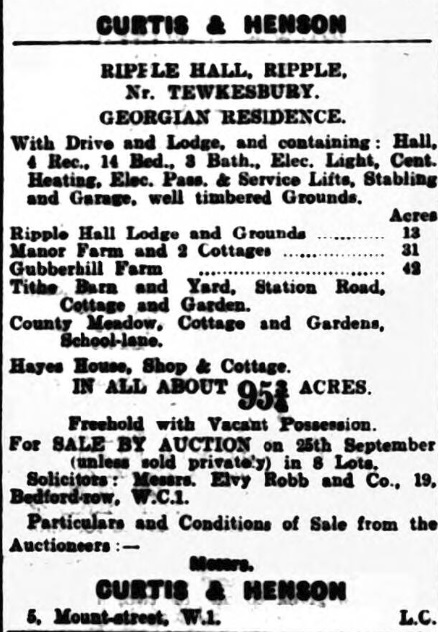
In 1930, Miss Behrens decided to part with Ripple Hall. This advertisement appeared in The Tewkesbury Register and Agricultural Gazette. She moved out the following year. Image: The British Newspaper Archive.
In World War One he had been in Consul in Oslo and Bergen in Norway. From 1922 up until his retirement he served in America, being Consul-General at Boston for the states of Massachusetts, Vermont, New Hampshire, Maine and Rhode Island.
Gray died in 1960 and Ripple Hall was bought by Mr and Mrs Hugo Baldwin Huntington-Whiteley.
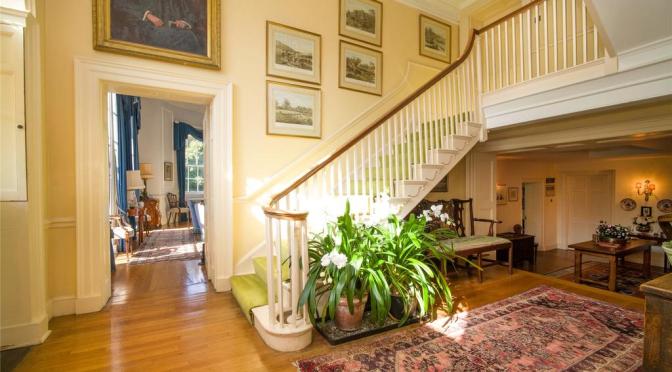
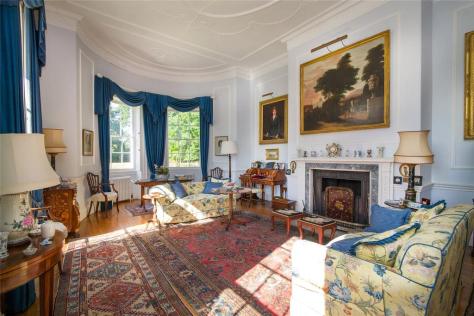
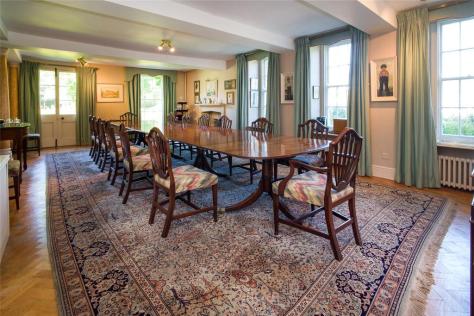
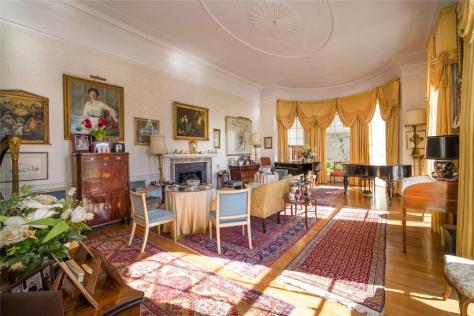
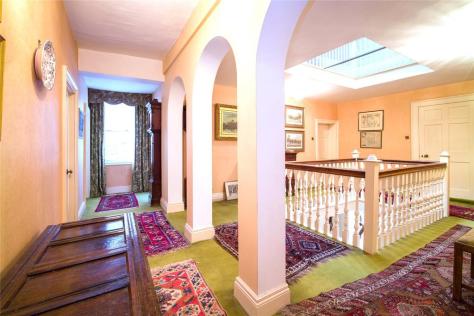
There are many examples of beautiful 18th century decorative fittings and architecture still present including fine ceilings and cornicing, sash windows and shutters, an original staircase to the first floor, wooden parquet flooring and original fireplaces which are all in working order. Image: Andrew Grant.
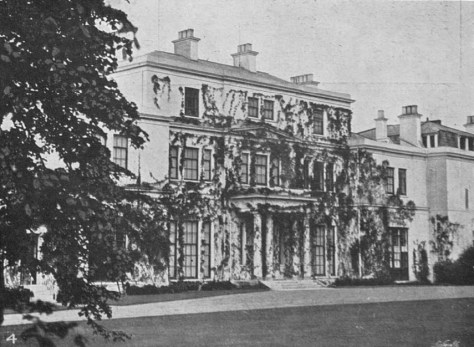
The house has similar characteristics to Ham Court and several houses in nearby Upton-upon-Severn. It has a five-window range with full-height curved bows to the east and west end walls. At one time the house had been covered in ivy, thoughtfully removed by Miss Behrens during her tenure.
Ripple Hall is on the market at Andrew Grant with a guide price of £2.25 million.
Ripple Hall, Ripple, Worcestershire. Image: Andrew Grant.Ripple Hall, Ripple, Worcestershire. Image: Andrew Grant.Ripple Hall, Ripple, Worcestershire. Image: Andrew Grant.Ripple Hall, Ripple, Worcestershire. Image: Andrew Grant.The house is next to the Grade I listed, 12th Century St Mary’s Church. Image: Andrew Grant.
In August, 1947, the Leamington Spa Courier announced that the executors of the late Sir Wathen Waller had instructed a Birmingham firm of auctioneers to offer for sale the remainder of the Woodcote estate situated at Leek Wootton, between Kenilworth and Warwick. The estate comprised a stone-fronted mansion, surrounded by charming grounds, the Home Farm, woodlands, and a number of cottages extending in all to about 253 acres.
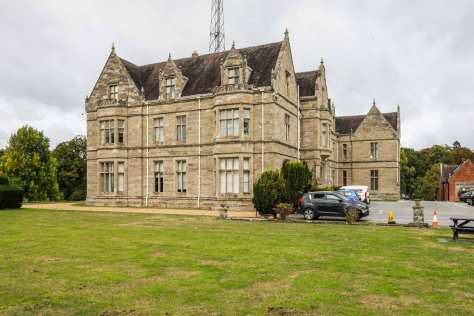
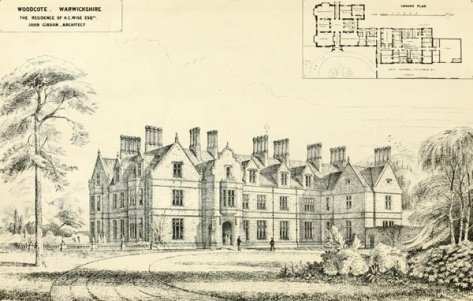
Grade II listed Woodcote House was built in Elizabethan-style in 1861 and extended in 1869 on the site of an earlier house. Designed by John Gibson, it was built in Jacobean style for Henry Christopher Wise. The Wise family once owned Warwick Priory, which was dismantled and removed to America. A member of the Wise family was head gardener to Charles I, a position of some importance.
In 1864, All Saints’ Church, Leek Wootton, was thoroughly repaired and an open roof, the gift of the late Henry Christopher Wise, was erected; there was also a memorial to his three sons. In 1897, carved choir stalls were installed by Lady Waller as a memorial to her husband, the late General Sir George Waller, 3rd Baronet, and a chancel screen was erected in 1930 in memory of Captain Sir Francis Waller, Royal Northumberland Fusiliers, killed in action in 1914.
The Wallers came of fighting stock. One of their ancestors captured the Duke of Orleans, at the Battle of Agincourt in 1415, when Henry V conferred honours upon him.
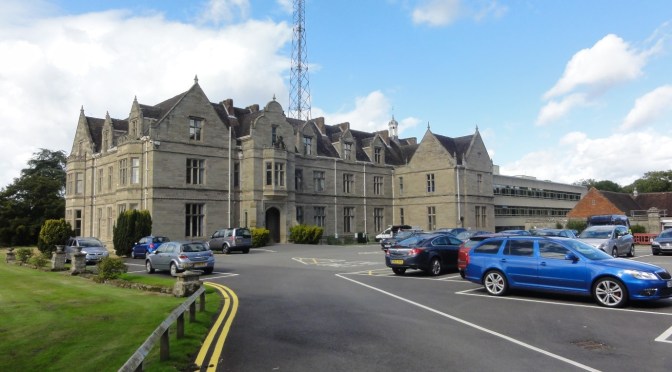
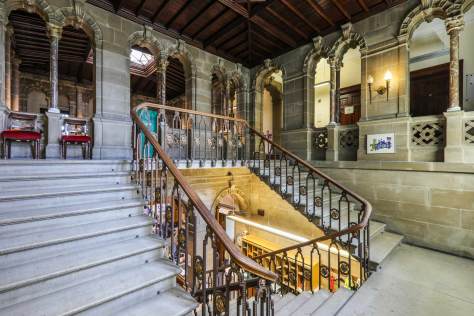
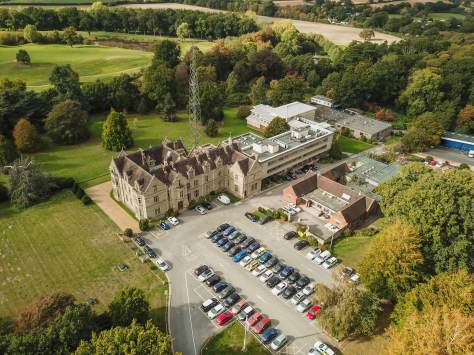
In 1947, the executors of Sir Wathen Waller sold Woodcote House to Warwick Rural District Council for £25,654 to be used as a police headquarters. Following a conversion costing £60,000 Woodcote became the headquarters of the Warwickshire Constabulary in 1949. The house is linked to the east to significant 1960s/70s buildings developed as part of the Warwickshire Police headquarters.
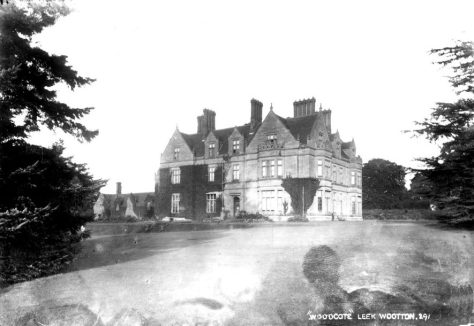
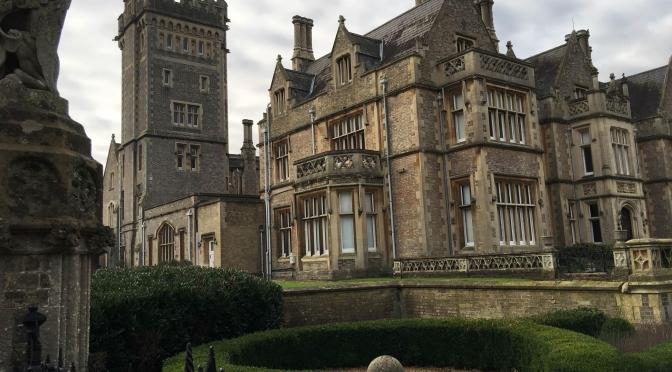
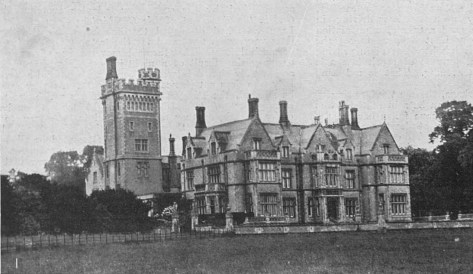
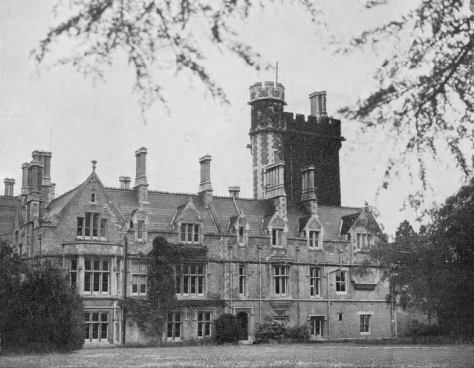
The new house of 1861 was built in practically the same position as an older house with stables, farm buildings and a kitchen garden in much the same place. The gardens and pleasure grounds were re-arranged, a reservoir built and five acres of the park were taken to enlarge the garden. Constructed with locally quarried stone, which like most Warwickshire sandstone, it is soft and crumbly. Image: Archiseek.Woodcote House, Warwickshire, in the 1900s. Image: Our Warwickshire.Woodcote House, Leek Wootton, Warwickshire. Image: GVA.
Forest Farm at Winkfield. This image is from The Illustrated Sporting and Dramatic News in June 1910. Image: The British Newspaper Archive.
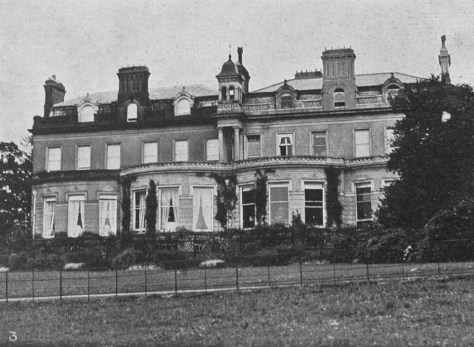
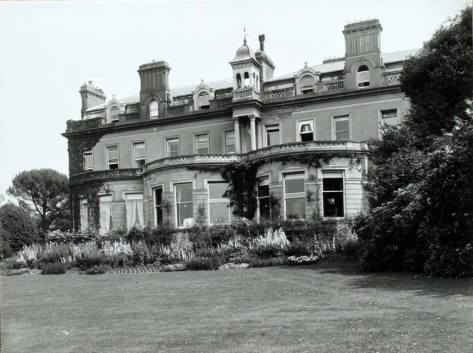
From The Illustrated Sporting and Dramatic News in June 1910. This was Forest Farm in Windsor Forest, Winkfield, in Berkshire, belonging to Henry Pelham-Clinton, 7th Duke of Newcastle (1864-1928). He had abandoned Clumber House in Nottinghamshire for the comforts of Forest Farm in 1908, although it appears to have been under his ownership from 1906.
Soon after moving in it suffered a fire that damaged the upper parts of the building. Presumably it had been restored at the time of this photograph. Following his death in 1928, the Dowager Duchess of Newcastle remained at Forest Farm until her own death in 1955, and the house appears to have been demolished in 1956. Consigned to history and virtually forgotten.
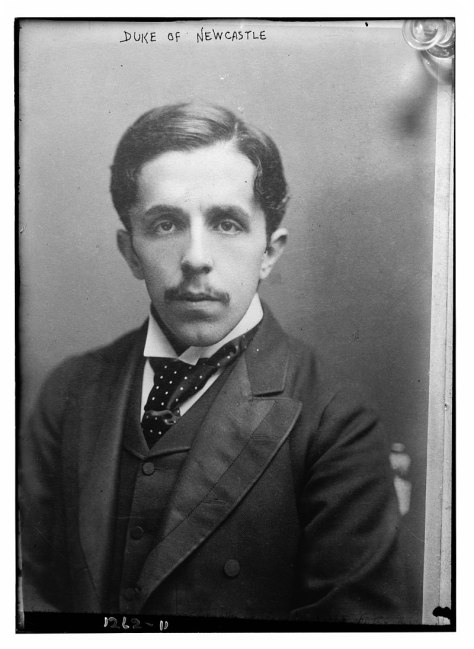
Henry Pelham-Clinton, 7th Duke of Newcastle. He had poor health and played only a small part in public life. As a staunch Anglo-Catholic he spoke on ecclesiastical issues in the House of Lords. One of his achievements was the restoration of the fortunes of his family estate. In 1879 a serious fire destroyed much of Clumber House in Nottinghamshire, he had it magnificently rebuilt to designs by the younger Charles Barry. His Thames Valley estate was at Forest Farm in Winkfield which he eventually moved to.Forest Farm was more convenient for the Duke of Newcastle. It was close to London and Eton and suitably positioned for Ascot Races. Sadly, it was demolished, presumably surplus to requirement.
New Lodge, in Windsor Forest, appeared in The Illustrated Sporting and Dramatic News in June 1910. It was the home of Colonel Victor Van de Weyer and was to be the scene of house parties for Ascot race meeting.
New Lodge, at Winkfield. This image appeared in The Sporting and Dramatic News in June 1910. Image: The British Newspaper Archive.
The house was built by Thomas Talbot-Bury (1809-1877) between 1856-1859 for Jean-Sylvain Van der Weyer (1802-1874), the Belgian Ambassador to Britain, friend of Queen Victoria and Albert and a notable book collector. His American father-in-law Joshua Bates, a partner in Barings’ Bank is said to have paid for the house, which was Tudor-Gothic, in the style of Pugin-Barry.
Queen Victoria and her children were regular visitors to New Lodge and planted the Wellingtonia trees that line the driveway.
Van der Weyer made his fortune from investments in the United States and Canada. The family held interests in Chicago, Detroit and Canada Grand Junction bonds, the Grand Russian Railway Company and Atlantic and St Lawrence railroad bonds, among others.
His wealth was used to buy land and farms surrounding New Lodge, as did his eldest son, Victor, who inherited the estate in 1874. After he died in 1915, Captain William Van der Weyer, a grandson of the Belgian Ambassador, sold the estate in 70 separate lots the following year.
New Lodge, which falls in between the parish of Bray and Winkfield between the Royal Borough of Windsor and Maidenhead and Bracknell Forest Borough Council is nearby to Windsor Great Park and is within Green Belt land. Image: The British Newspaper Archive.
New Lodge was bought by Dr Venables (or Venebles) who leased it in 1925 to New Lodge Clinic Ltd, an exclusive establishment that operated until 1939, when the house was sublet to Sir Malcolm Deleringe and others for the accommodation of refugees. In 1942, the house was bought by Dr Barnardos, the children’s charity, for £24,000.
In 1956, New Lodge was acquired by the British Railways Transport Commission for £24,000 and turned into a training school, known as ‘The British Railways School of Transport’. At the time, the purchase of the house was believed to be more economical than the cost of a new building. However, the cost of conversion was said to have eventually cost over £100,000. It was later shared with B.T. Hotels, who used it to train staff until 1964.
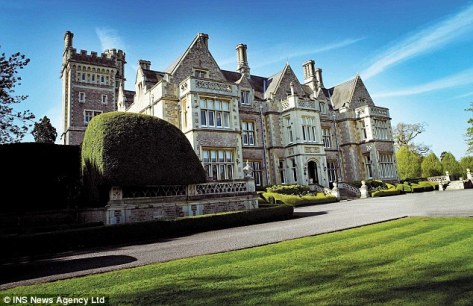
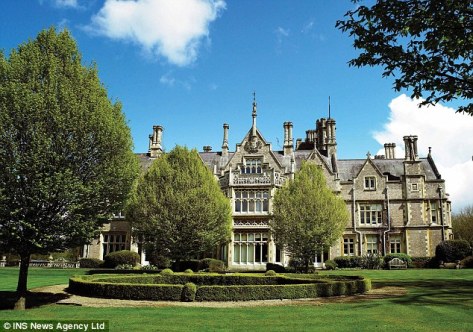
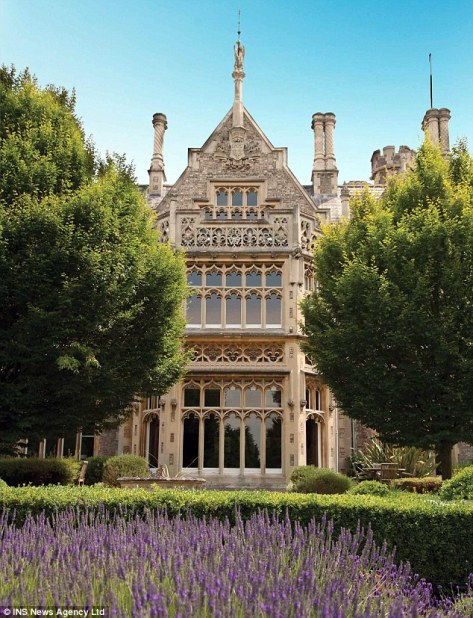
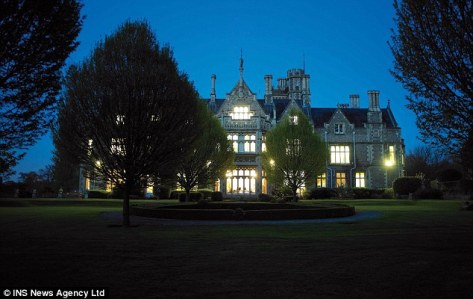
New Lodge is currently an office conversion featuring around 30 units. Image: INS News Agency Ltd.
Faced with high running costs, the Commission closed the facility in 1971 and sold it a year afterwards to environmental information specialist Barbour Index, who used it as offices. Afterwards the Grade II* listed house was extensively refurbished and, after being sold in 2004 to the Marchday Group for office use, it was put up for sale again in 2013.
In 2016, a planning application was submitted by two brothers to convert New Lodge from serviced office use back to residential. Lewandowski Architects, based in Eton were appointed to work on the project and restore the listed building as far as possible to its original features.
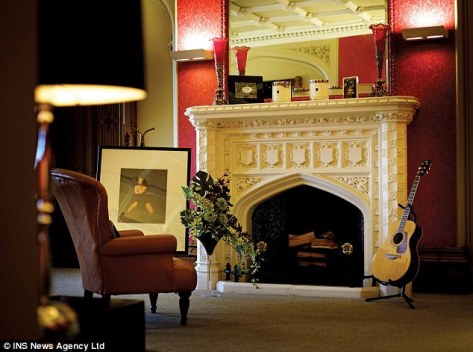
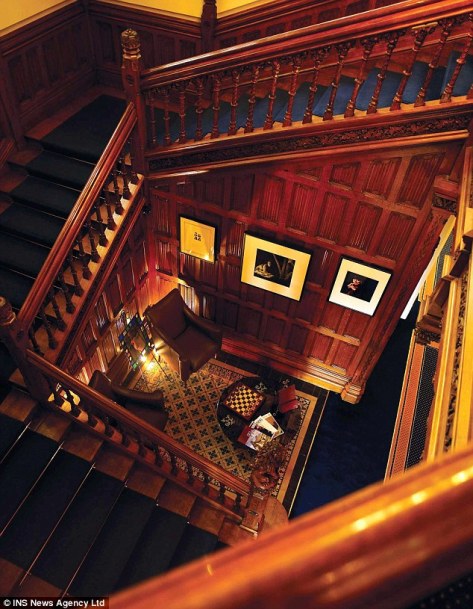
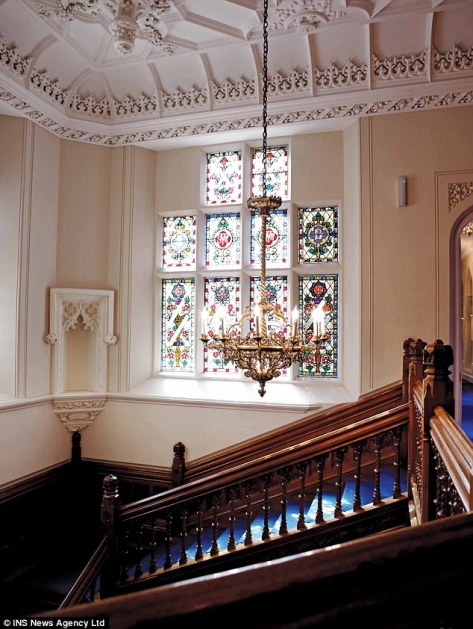
The hunting lodge that was once a favourite of Queen Victoria was put on the market 2013. Image: INS News Agency Ltd.In 1972 New Lodge appeared in the Hammer House of Horror classic ‘Asylum’ starring Robert Powell, Peter Cushing and Britt Ekland. Image: INS News Agency Ltd.New Lodge still has many of its original period features, including this imposing fireplace. Image: INS News Agency Ltd.The floors have been converted into dozens of offices all with catering and toilet facilities but maintaining the stunning features of the building, including a grand staircase with a large stained glass window. Image: INS News Agency Ltd.The building went under considerable refurbishment in 2004 as independent business suites owned by Marchday Group Plc. Image: INS News Agency Ltd.It is hoped that the former hunting lodge will be restored back into a family home. Image: INS News Agency Ltd.
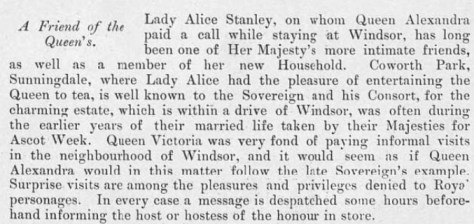
The home of the Earl of Derby appeared in The Illustrated Sporting and Dramatic News in June 1910, highlighted for its close proximity to Ascot Racecourse.
Coworth Park at Winkfield. From The Illustrated and Sporting Dramatic News in June 1910. Image: The British Newspaper Archive.
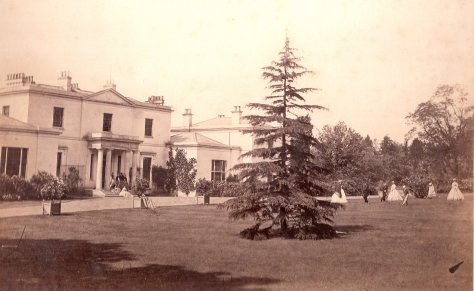
Coworth Park appears to have been built in 1776 for William Shepheard, an East India merchant. His son sold it before 1836 to Colonel George Arbuthnot, a Scottish Colonel who served in Madras. It passed to his nephew John Alves Arbuthnot , a director of the London Assurance Company and of the London and Colonial Bank, and later a founder of Arbuthnot Latham & Co.
In 1883, his son, William Arbuthnot sold Coworth Park to William Farmer (afterwards Sir William Farmer), chairman of Farmer & Co Ltd, Australia merchants and later Sheriff of London in 1890-91. About 1899 he sold the estate to Edward George Villers Stanley (1865-1948), Lord Stanley, who in 1908 succeeded his father as 17th Earl of Derby. His widow died in 1957 and the house became a Roman Catholic convent school and was later converted into offices by Harold Bamberg, a director of the travel agency Henry Simpson Lunn (later to become Lunn Poly) and also chairman of British Eagle Airways.
Royal visitors were no stranger to Coworth Park, a trend that still exists. This article appeared in The Sketch in June 1901. Image: The British Newspaper Archive.The land that Coworth Park now stands on was granted in 1066 by Edward the Confessor to Westminster Abbey. William the Conqueror regained possession of it from the Abbey in exchange for lands in Essex. Theoretically, the manor of Old Windsor still remains with the Crown. In 1606 it was leased by James I to Richard Powney, whose great grandson, Penyston Powney, was administering it in 1737. After his death in 1757, his son and heir, Penyston Porlock Powney, became the Crown lessee, and was still appearing as such in records when Coworth House was constructed in 1776. The land was conveyed in 1770 by William Hatch and Elizabeth his wife, who were presumably Powney’s agents or sub-tenants, to one William Shepheard.
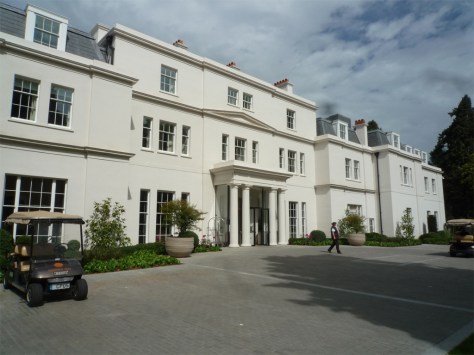
In the mid-1980s, Coworth Park was acquired by Galen Weston, owner of Selfridges and Fortnum & Mason, who developed the property’s first polo field. These days Coworth Park is owned by the Dorchester Collection, owned by the Brunei Investment Agency, and is a luxury hotel and resort, altered significantly inside and enlarged between 2005 and 2011.
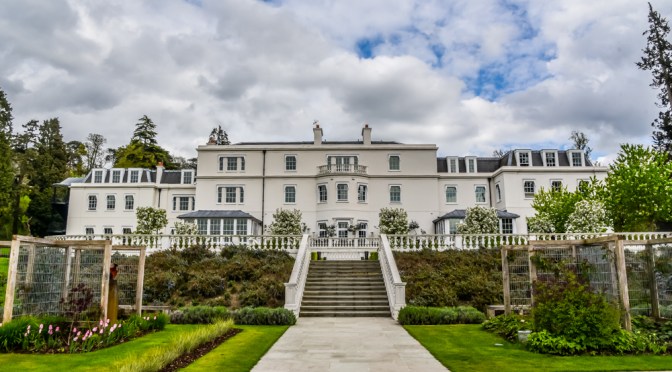
This Georgian manor house is the only hotel in the UK to have polo fields, an equestrian centre and stabling. A fitting spot then for Prince Harry and his best man Prince William to have spent the night before the royal wedding. Image: HLN Group.
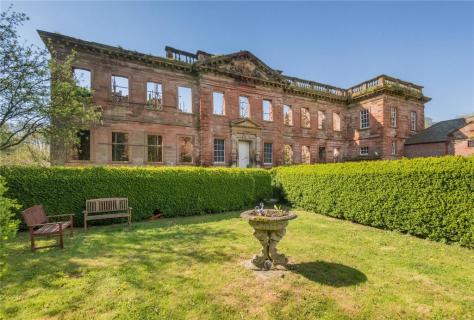
If stones could speak, Highhead Castle, at Ivegill, Cumbria, would have a tale to tell, one in which romance and pathos, were blended in a chronicle of a man’s bitter disappointment.
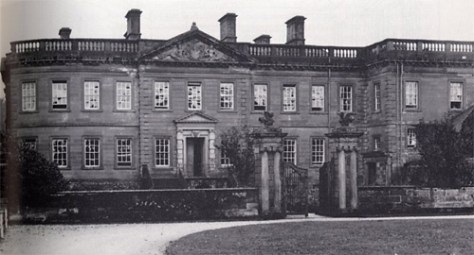
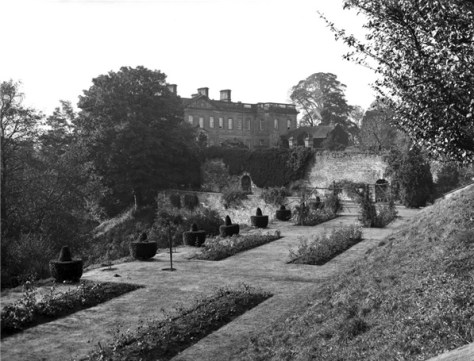
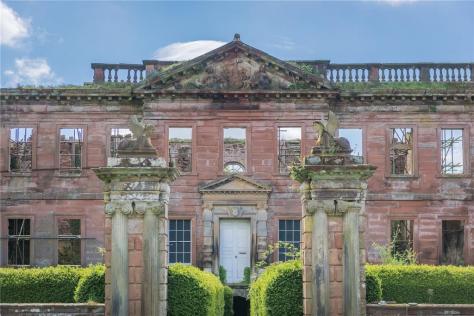
Henry Richmond Brougham, had a new facade built in 1744-48. It is eleven bays long, with a pedimented three-bay centre, and a walled front garden with coupled Ionic columns. Image: Lost Heritage.
Today, the remains of the real castle, built more than six centuries ago are almost non-existent. The Castle was here when the Richmond family became owners in Tudor times and added a West Wing to the old fortified mansion.
A century later a fortunate marriage brought Catterlen Hall to the Richmonds and here, too, they left a memorial of themselves in the fine 17th century wing of that fascinating house.
By 1716 both properties were ruled over by the widow of Christopher Richmond. Ruled was the right word for Isabella Miller – she took a second husband – was a matriarch who ruled with a rod of iron and gave no quarter.
Of her family of eleven, only the daughters married. The one son who grew to manhood died at the age of 26 in 1716, and his mother – who mourned him deeply – was faced with the problem of the disposal of the two estates after her death. She had many descendants from whom to choose, and eventually the lot fell upon her grandson, Henry Richmond Brougham, whom she hoped to make head of a new line at Highhead.
Her will was framed to this end, but its provisions spelt ruin to Highhead Castle in the end.
Highhead Castle was originally occupied by the Kings Castle in the Forest of Inglewood, the earliest written record of the original castle is from 1272. Image: Lost Heritage.
At the time, Henry Richmond Brougham was 17, and the old lady disposed of Highhead in this way. One half was to be enjoyed by her unmarried daughter, Susanna Richmond, for her life, and the other half Susanna was to have until Henry Richmond Brougham came of age. In the event of his dying unmarried his half was to revert to Susanna.
Isabella Miller died in 1739, the year before her grandson came of age. If she had had dreams for him, so had Susanna Richmond, his aunt, who found that the boy’s uncle, John Brougham, of Scales Hall, Skelton, was equally anxious that Henry Richmond Brougham should reign happy and glorious at Highhead. Nothing but a complete rebuilding of the old castle would do.
Down came the two 14th century towers, leaving only the Tudor wing standing. To this was added an 18th century house, at a cost of £10,000 – a very large sum in the days of its construction when masons were paid 10d a day. ¹
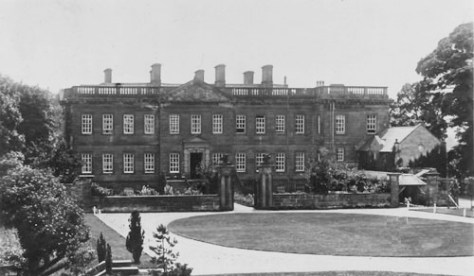
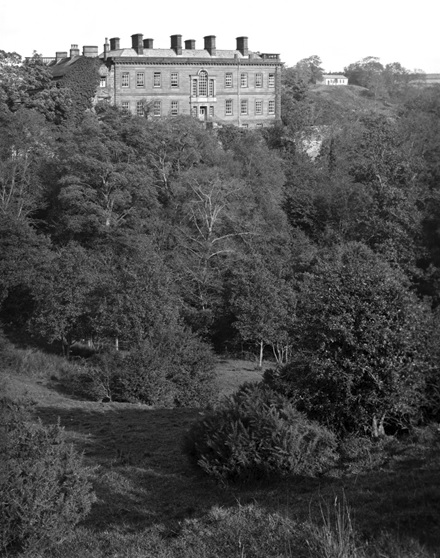
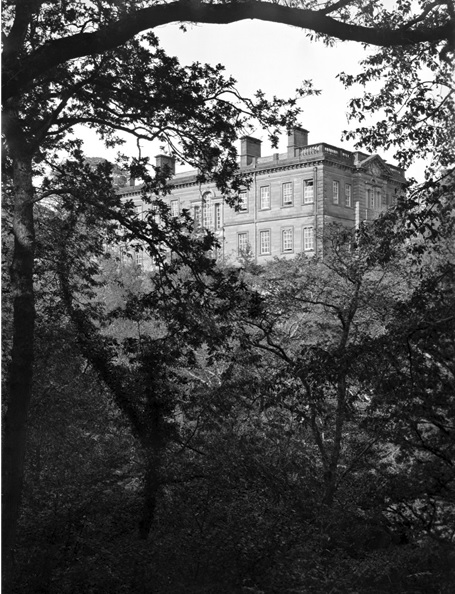
The north front of Highhead Castle. The house was largely destroyed by fire in 1956. Image: Country Life.Looking across the valley towards Highhead Castle. Image: Country Life.
It is said that John Brougham had spent some time in Italy and acquired a passion for Italian designs and workmanship. It is certain that he brought over Italian craftsmen to carry out ceilings, cornices, and other plasterwork. In a tantalising reference, William Jackson, writing in 1874, spoke of the “traditional gossip” about the foreign craftsmen, which still lingered in the district. As the work neared completion, Henry Richmond Brougham, by now 30, was chosen as High Sheriff of Cumberland. To support him in this dignity, his uncle made over to him four estates – no doubt with a hint that they were to be handed back when the year of office was over.
Fate stepped in at this point and death claimed Henry Richmond Brougham before the year was ended. The work at Highhead was suspended, and the building operations never resumed.
The four estates passed to the young man’s legal heir, who, to quote Mr Jackson, “did not recognise the property of returning them” to John Brougham.
Highhead and Catterlen now became the property of Susanna Richmond for life. While she lived all was yet well. She lived in state at Highhead and enjoyed the good things in life. In the 1870’s there still remained at Greystoke Castle some of the ale brewed at Highhead and given by Susanna to the then Duke of Norfolk. It was said to have been a drink fit for kings.
The corridor at Highhead Castle looking east. Originally a medieval tower, the castle which was enlarged in 1550 and remodelled in 1748. Image: Country Life.A Venetian window in the upper corridor at Highhead Castle. Image: Country LIfe.The drawing room at Highhead Castle. Image: Country Life.
Miss Susanna lived on until 1774, when she died at the age of 87. She had the power of disposing of Catterlen and left it to her niece. Mrs Curwen, of Workington Hall.
Highhead, on the contrary, now passed under complicated terms of her mother’s will and the trouble began. The old lady had never envisaged the untimely end of her grandson. He was to have shared one half of the house with his aunt, on whose death he would be entitled to the other half.
Now, however, the ownership of the Castle was divided into two halves and each half into fourths. In the end, none of the owners occupied the Castle, and from 1774 it was deserted except that estate tenants could use some of the rooms as store rooms and granaries.
Writing in 1794, William Hutchinson said “the swallows and jackdaws have now been its only tenants for many years, and it is doubtful the whole fabric will be suffered to go to wreck.”
The divided ownership was the curse of the Castle. Legal squabbles were kept up until the owners of one half at length decided to pull down that portion and sell the materials. The work of destruction had indeed begun but was stayed by the sale of that half about 1820 to Henry Brougham, later to be Lord Chancellor, who eventually bought the other half and so became owner of the whole.
Whellan, writing in 1860, said: “There was formerly a good deal of carved woodwork about the building, but this has been removed to Brougham Hall.” About this time the house was repaired and was let as a farmhouse. ²
The second Lord Brougham carried out more repairs between 1868 and 1874. His son and successor sold Highhead Castle – still used as a farmhouse – in November 1902, to Judge Herbert Augustus Hills for £18,000. From the judge it passed to the Right Hon John Waller Hills, became tenanted, and he sold it to Colonel Alan Dower, MP, on whose instructions it was offered for sale in June 1950.
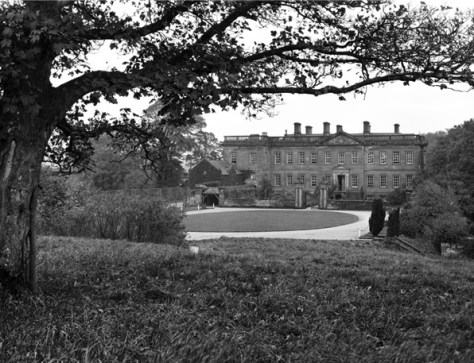
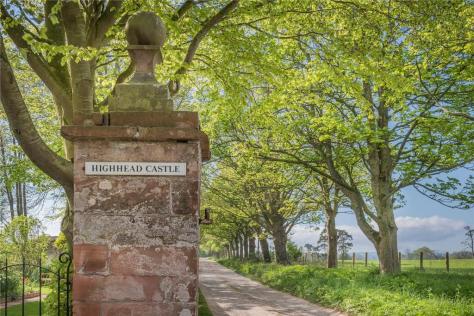
Looking towards the gates of the forecourt at Highhead Castle. Image: Country Life.Looking over the terraces towards Highhead Castle from the north-east. Image: Country Life.Looking through the trees towards Highhead Castle. Image: Country Life.
In August 1950, the Ministry of Town and Country Planning announced that Highhead Castle had been scheduled as a building of special architectural and historic interest.
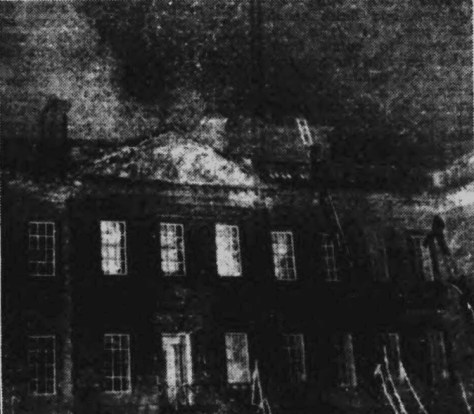
On Tuesday, December 12, 1956, Highhead Castle, now owned by Mr Gordon Robinson, a Penrith butcher, had been away with his wife on business. On their return they found the 30-roomed Georgian mansion on fire, their three small children having been rescued and taken to safety in a neighbouring farmhouse.
The alarm had been raised after farmers saw smoke billowing from a bedroom window. When firemen arrived only the small wing where the family lived was burning. A Cumberland News reporter said: “In no time at all the wind had driven the flames to another room, then there was no stopping the raging inferno as flames and smoke swirled in the rain. It was a terrible sight as scores of villagers and helpers were told to keep back out of danger, while firemen risked their necks to fight the blaze from inside the castle.”
A split-second saved one fireman as he ran down the main staircase to the main hall. A heavy red-hot beam dropped inches behind him, setting the staircase alight. Other firemen and helpers ran from the house.
The roof began to break in with dull, monotonous cracks, and turntables were brought out to fight the fire from above. Flames were swirling all around the firemen as they carried hoses to the top of the turntables. “They stood out like ghosts in the glare, against the charred black background of the castle walls.” Glass splintered in all directions, bursting with intense heat, as firemen continued to pump water 400 yards from the River Ive all through the night.
A rare photograph of the fire at Highhead Castle in 1956. This picture appeared in the Penrith Observer. Image: The British Newspaper Archive.
Jim Templeton was a firefighter on that December night in 1956 and said the conditions were terrible. It was so windy that one of his colleagues was blown off a ladder. The fire was well alight when they arrived and there was little they could do to save the house. Jim had a lucky escape himself, he said that a heavy iron bath fell through the house as the timbers became sodden with water and almost landed on him. ³
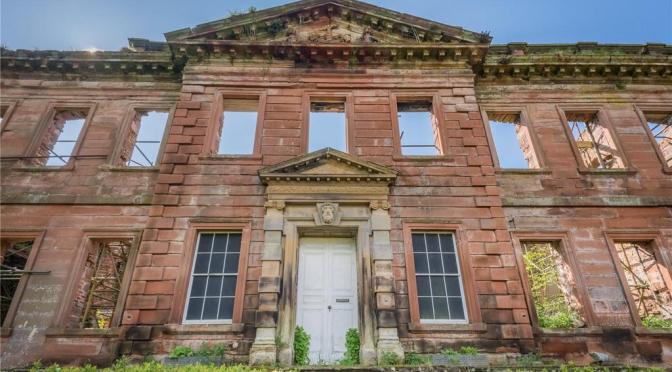
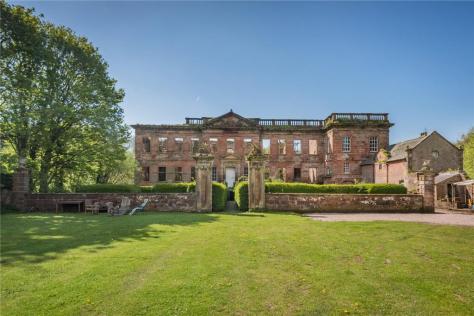
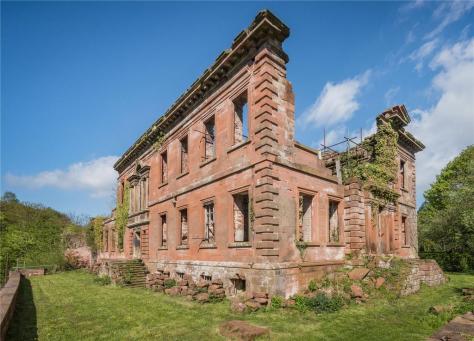
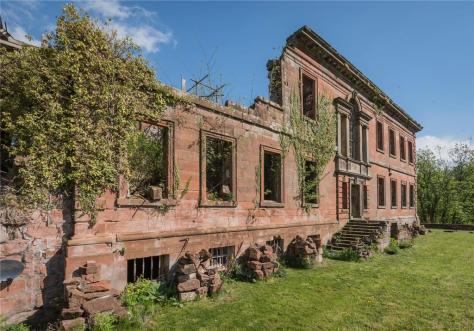
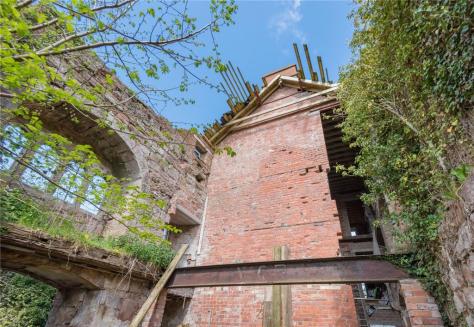
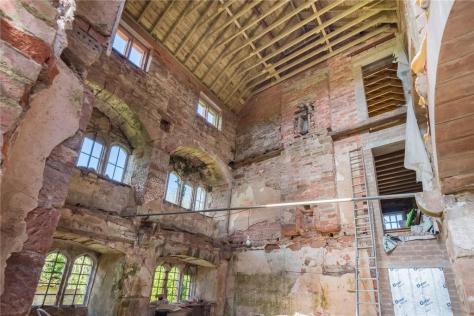
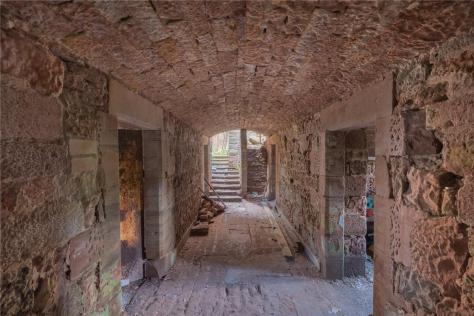
Now only the outer walls and cellars remain. The magnificent terraced gardens are also in need of a lot of work, but the facade of the house is pretty much intact.
Highhead Castle survived demolition and has been on Historic England’s Buildings at Risk Register. A unique opportunity now exists to carry on with the good work that has already commenced in the preservation of the property. Image: Savills.
An application was made in 1985 to demolish the remains which was defeated after a public inquiry. Christopher Terry (1938-2016), who also owned Brougham Hall near Penrith, bought Highhead Castle just as it was about to be demolished. In fact, he said, he was given an hour’s notice and shot up to the house just in time to save it.
In November 2018, Highhead Castle is on Historic England’s Buildings at Risk Register, classified ‘A’, being the highest priority. With support from Historic England and the Country Houses Foundation, emergency stabilisation works have been completed and an options appraisal has been produced to help secure a viable and sustainable long-term use. It is currently on the market at Savills with offers wanted over £250,000.
Notes:- ¹ The Classical House was built for the Brougham family between 1744-49, from the same red Lazonby sandstone as the gorge below it and is thought to have been designed by renowned architect James Gibbs.
² What happened to the woodwork which Lord Chancellor Brougham took from Highhead to Brougham Hall? Presumably it was among the 5000 square feet of linen fold and Jacobean oak panelling which was sold at Brougham Hall on July 18, 1934, before the house was abandoned. On that day, 730 square feet of oak linen fold panelling in the dining room were sold to a London buyer for £130, and a screen of Italian workmanship from the Armoury was sold for £30 to Mr Eugene Andrews. This screen was relocated to St John’s Church in Girvan. It may have come from Highhead Castle or have been bought from the Continent by Lord Chancellor Brougham, who bought many treasures during his frequent trips abroad.
³ BBC Radio Cumbria. May 20, 2006.
⁴ The Classical House, northern garden wall and Tudor West Wing are all separately listed Grade II* and the servants wing and piers to the end of the drive are both listed Grade II.
In June 1938. Ashley Courtenay, the resident hotel inspector for The Illustrated Sporting and Dramatic News, visited ‘a new sporting hotel’, Knappe Cross in Exmouth, Devon, managed by Mr William Dedman and his wife Winifred.
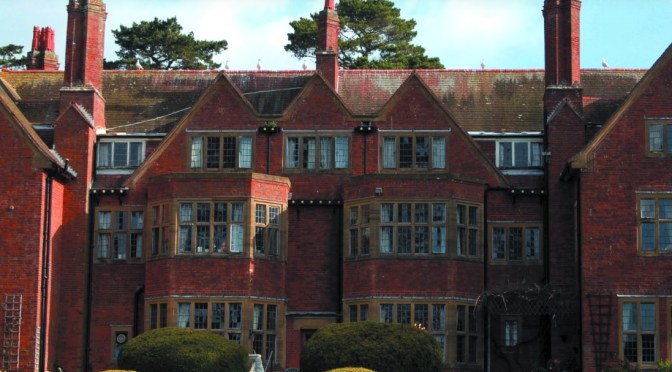
Knappe Cross. Designed by William Ansell, a member of the Arts Workers Guild of which he was master in 1944. It was described in 1909 as… ‘extremely simple, projecting mouldings being avoided and good material and proportions being relied upon for effect.’ Image: The British Newspaper Archive.
“Driving up a narrow lane on the Honiton side of Exmouth you will come upon an imposing pair of park gates. It is a magnificent building designed in the best Tudor style by a famous architect, and its outside appearance, as it stands in its beautiful tree-girt grounds looking across the valley to the sea, a mile away, is truly impressive. Inside you will find rooms which are as magnificent in proportion as the outside of the building suggests.
“The furnishings are modern and very fine, but chosen to accord, perfectly with the natural dignity of the house. Every modern luxury of equipment, such as central heating and softened water, is here for your convenience, but the pleasant features of the more romantic periods of domestic architecture have been allowed to take their place.”
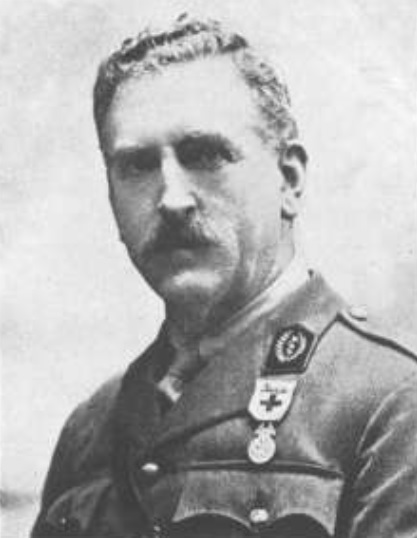
Dr Ethelbert Petrie Hoyle (1861-1955). Image: Sue Young Histories.
It was a new dawn for Knappe Cross, a country house that was completed in 1908 for Dr Ethelbert Petrie Hoyle (1861-1955) by architect William Ansell and built by Crediton builders, Dart and Francis. Hoyle was an American homeopathic doctor who was said to have enjoyed a generous income from investments in South African tin mines. It was a large house of red brick with stone dressings and clay tiled roof in Elizabethan style; an interesting design that attracted the interest of Architectural Review magazine.
In the end, Hoyle’s stay at Knappe Cross was short-lived. Shortly after moving in, tragedy struck when his son Michael died at birth, possibly casting a shadow over the mansion.
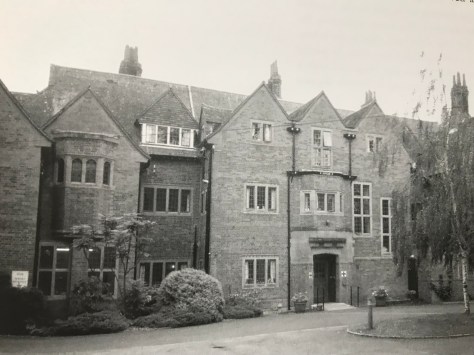
Knappe Cross. Designed in 1908 by William Ansell and built by Dart and Francis of Crediton. Ansell later became President of the Royal Institute of British Architects (RIBA). Image: The Country Houses of Devon.
In 1910, Hoyle sold Knappe Cross to Augustus Arthur Perceval, 8th Earl of Egmont (1856-1910), whose family had been owners of Cowdray Park in Sussex which he had sold two years earlier. He was an interesting character. Born in Lancashire he had lived in New Zealand for a while, later becoming a naval cadet, a fireman and a caretaker at Chelsea Town Hall. Unfortunately, he died before taking possession of Knappe Cross, and it was his widow, Kate, daughter of Warwick Howell of South Carolina, who lived in the house.
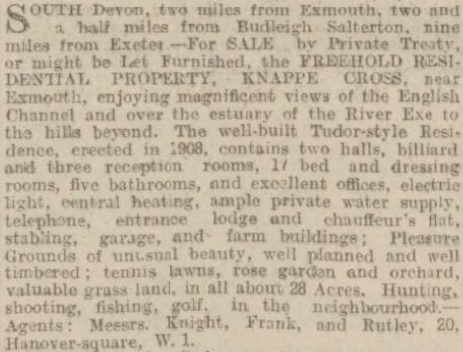
Sale notice from October 1926. Image: The British Newspaper Archive.
By the 1920s the house was in the possession of Mr E. J. Spencer, passing in 1928 to George Ernest Wright of Pudleston Court, Hereford. He had been High Sheriff of Hereford in 1914 and was a director of the Lilleshall Company and John Wright and Co of Edgbaston in Birmingham. Wright died in 1933 and his wife, Matilda, stayed at Knappe Cross until her own death two years later.
Knappe Cross Devon Ltd was formed in 1938 as the holding company for the new hotel. However, the outbreak of war in 1939 meant it was an unfortunate and ill-fated move. There was little enthusiasm for a ‘sporting’ hotel and Mr and Mrs Dedman needed alternative revenue to keep the business solvent. Salvation came in 1941 when the Royal United Service Orphan Home for Girls (‘children of our brave sailors, soldiers and airmen’) moved from Devonport to the peace and quiet of Knappe Cross.
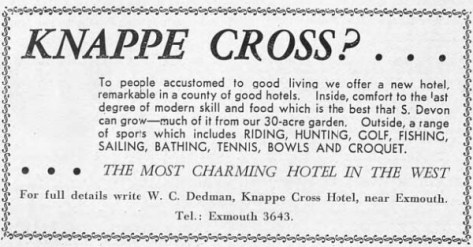
Knappe Cross Hotel opened in 1938. This advertisement from the same year appeared in newspapers across the country. Image: The British Newspaper Archive.
After the war the orphanage moved to the Army and Navy Villas at Newquay, in Cornwall, and Knappe Cross became a hotel again in 1946, this time under the management of Edgar Philip Jenkins. It became a convalescent home for the Post Office in 1952 and became a hotel again in 1981, before being converted into a nursing home, with a new wing added to the house in 1992.
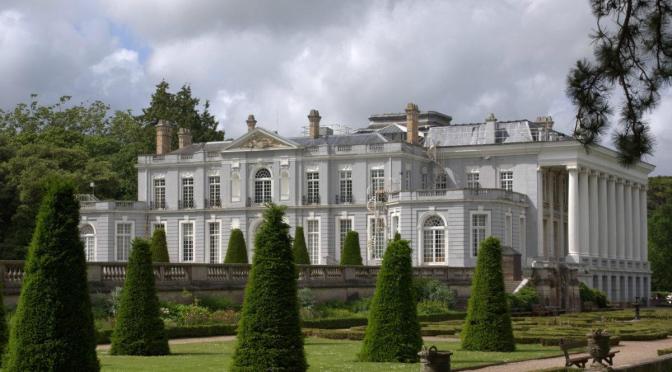
Built by the Singer family to take advantage of Devon’s mild climate and cosmopolitan society. One hundred years after use as a military hospital it faces an uncertain future.
The tradition for building large villas in the hills overlooking Torbay began in the late 18th century. Image: The Victorian Society.
On the day that The Victorian Society has released their Top 10 Endangered Buildings List 2018, we take a look at Oldway Mansion at Paignton, the only country house to feature on this year’s listing.
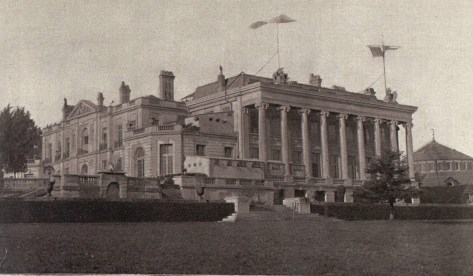
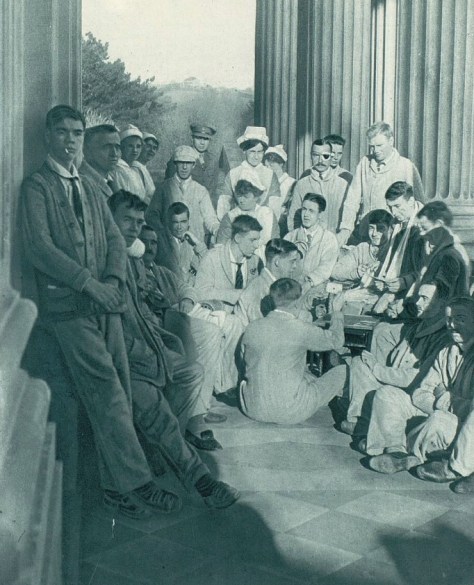
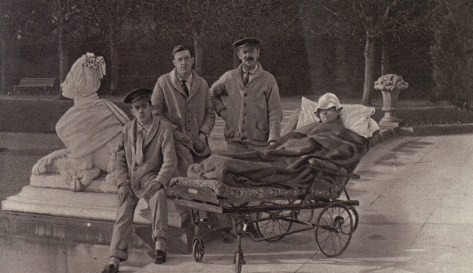
One hundred years ago, life at Oldway was very different, if not more traumatic. American women were rendering generous and greatly appreciated help here to the wounded Allies’ forces, the house renamed as the American War Hospital. It was one of the finest and best-equipped in the whole range of Red Cross undertakings. Mr Paris Singer, who was well known as a skilful aviator, had given over his palatial residence with its hundreds of rooms and beautiful grounds, an ideal home for the wounded. Dr Penhallow was the chief surgeon, and a staff of over a hundred and fifty nurses carried on the work under Colonel Gunning.
Paris Singer rebuilt Oldway between 1897 and 1910. Four years later, he converted the mansion into a military hospital, after which he never lived here again. He departed for America where he developed the resort of Palm Beach. Image: The British Newspaper Archive.
This glorious house of 1873 was built by George Bridgman as a private residence for Isaac Merritt Singer, founder of the Singer Sewing Machine Company, and later rebuilt by his third son, Paris Singer, in the style of the Palace of Versailles. Following the end of an affair with dancer Isadora Duncan in 1917, Paris Singer went to live in the United States. Oldway Mansion became the Torbay Golf & Country Club in 1929 and was bought by Paignton Urban District Council in 1946.
From The Illustrated War News. January 1917. The wounded soldiers seen in this photograph were enjoying a came of cards on the terrace of Oldway. Image: The British Newspaper Archive.From The Illustrated War News. January 1917. Oldway, at Paignton in Devon, was being used as the American War Hospital. Image: The British Newspaper Archive.
Following many different functions during the later 20th century, it was used as council offices from 1946 until 2007 when the council announced its intention to sell the building as it had become too expensive to maintain. This proved controversial with residents who wished it to continue being a public space. In 2012, plans for the building to be converted into a luxury hotel and sheltered retirement flats were approved by the council, but works never started. In 2016 there emerged a legal dispute between the developers and the council over the leases, which developers claimed had caused the delay on the redevelopment. This heated legal dispute ultimately brought an end to the planned development, leaving the council once again with the issue of how to proceed with the empty listed building.
Lord Glanely is probably best remembered today as a noted racehorse owner, whose horses won all five Classic races of the British turf. However, he made his money in shipping.
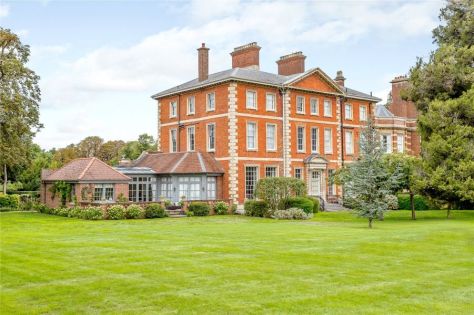
Image: Strutt & Parker.
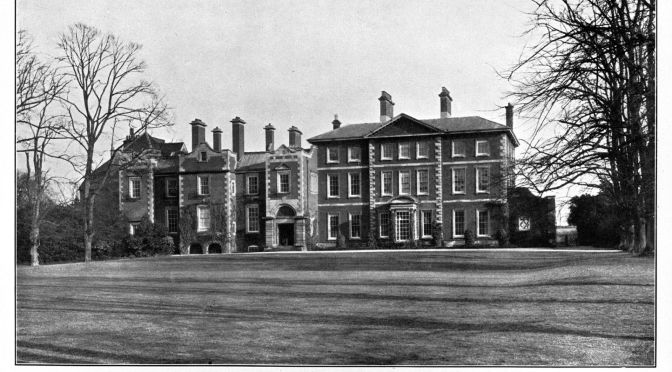
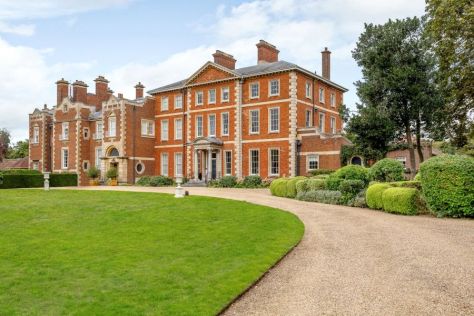
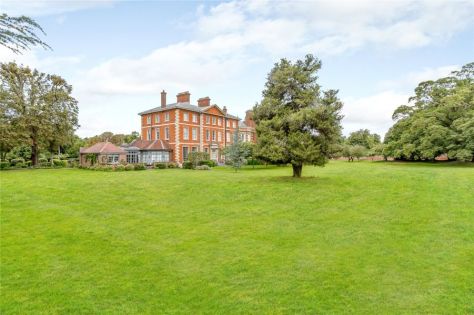
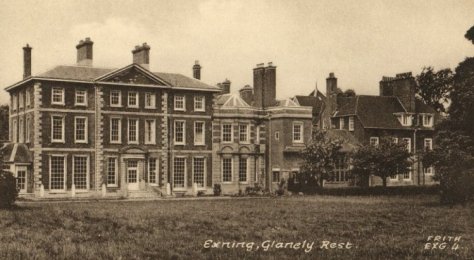
Exning House was built by Francis Shepheard in 1734 to the design of the mason, Andrews Jelfe. From that time, it was occupied by the principal landowners in the village. It was at the centre of 1 700 acres estate and from the early 19th century was set in an extensive park.
The Shepheard family were wealthy landowners, possessing several manors and much property, sufficiently for the illegitimate daughter of Samuel, the surviving brother of Francis, to be described as an heiress, and win the hand of Charles Ingrham, one of the many sons of Lord Arthur Ingrham of Temple Newsam in Yorkshire.
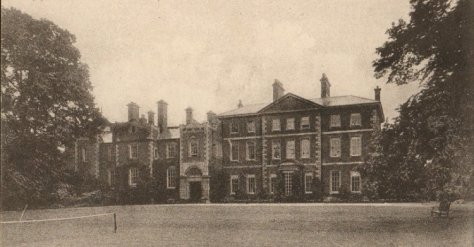
The front of Exning House, later Glanely Rest, used as an old peoples home before becoming empty. Image: Exning.net.
The estate was sold in 1794 to John Dobede, chairman of the Newmarket Bench and a senior magistrate in Cambridgeshire and Suffolk, whose son, Henry F. Dobede, restored and enlarged the hall. In 1881, the house was auctioned and sold to Mr Fenn of Newmarket, representing the Stewards of the Jockey Club, for £165,000. It was deemed an important purchase, being adjacent to the race-course, and suitable for accommodation purposes. When the Prince and Princess of Wales visited Newmarket for the July meeting in 1882, it was here that they stayed.
Image: Strutt & Parker.
In 1883, Exning House, along with its gardens and grounds, was let to Lord and Lady Carcross. They remained until 1891, at which time the Jockey Club put a portion of the Exning estate up for sale, including the mansion itself. The sales catalogue described it as ‘a mansion of handsome and classic design in red brick, with stone facings and Corinthian portico, situate in a finely-wooded park’. At the auction, it sold for £32,500 to Mr Morton, a London solicitor, acting on behalf of Captain Edward W. D. Baird, a retired officer of the 10th Hussars. Baird had a keen interest in horse-racing and was the eventual owner of Woolwinder, which won the St Leger in 1907. He became Major Baird after accepting a temporary rank in the Imperial Yeomanry in 1900, later attaining the rank of Colonel.
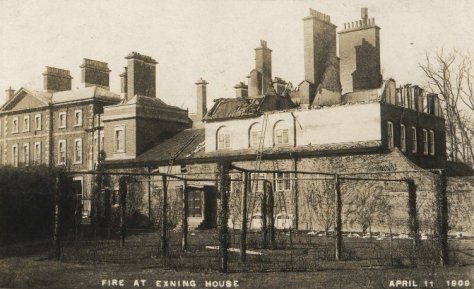
Colonel Baird made several improvements at Exning House, but a serious fire in April 1909 damaged the property. The outbreak originated in the upper portion of the new north wing, where, in addition to about twenty servants, the nurseries, governess’s and housekeeper’s apartments were situated. Several rooms were gutted, and so serious was the outlook that a large body of men started removing the valuable contents, completely emptying the house and placing them in the park. The blaze destroyed the north wing, built in 1893 for £15,000, and Colonel Baird and some of his helpers had sustained several injuries. The house was rebuilt using the architect Philip Webb to alter and extend the property in 1896.
Image: Exning.net.
When the Bairds moved to their London home in 1913, the Exning estate was put up for sale and purchased by Lord St. Davids.
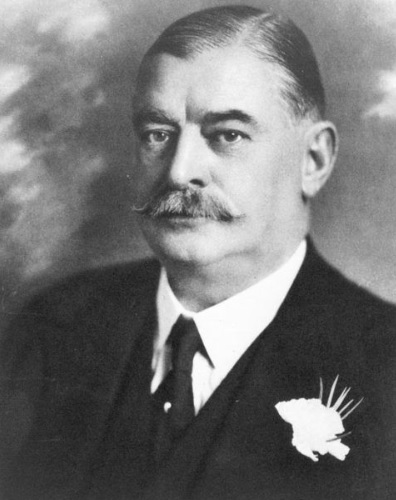
Image: Strutt & Parker.William James Tatem, 1st Baron Glanely of St Fagans. Image: Museum-Wales.
William James Tatum, 1st Baron Glanely, a Cardiff shipping magnate, philanthropist, and thoroughbred racehorse owner acquired Exning Hall and the Le Grange Stable in Newmarket sometime before 1920. Born in Devon, the son of Thomas Tatem, who died the year he was born, the young William, aged 12, signed on and sailed on a voyage around the Cape Horn. He later entered the office of a Cardiff shipowner, gradually building up his own business, and was described as ‘a cabin boy to millionaire’. Tatem was created a Baronet in 1916, and two years later rose to the peerage. Between 1919 and his death in 1941, his horses won 6 Newmarket Classic races. In June 1942, after taking a summer house in Weston-Super-Mare, he was killed in a German air raid on the town
After his death, Exning House passed to his nephew, George Cock Gibson of Lanwades Hall in 1948, who put it to use as a home for the elderly, along with a cash donation of £10,000. Known as Glanely Rest, the house was later abandoned until converted into three separate properties.
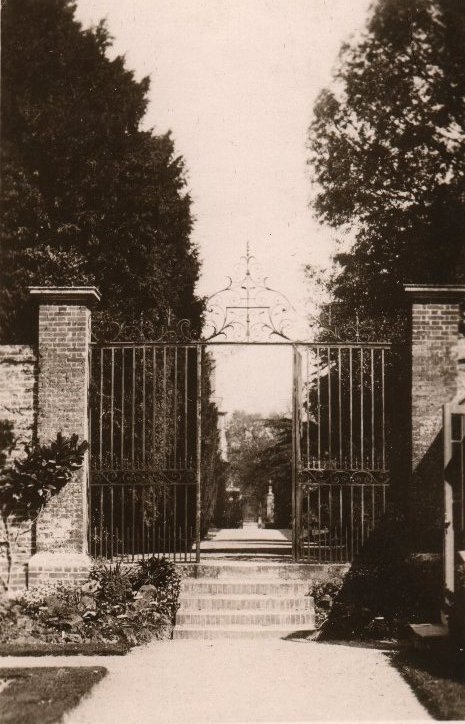
One of a pair of wrought iron gates leading into Glanely Rest from Windmill Hill. Image: Exning.net.The rear view of Glanely Rest from an old postcard. Image: Exning.net.
Exning House is Grade II* listed because of the rare, almost complete example of a country house by Philip Webb. In September, 2018, it is on sale at Strutt & Parker with a guide price of £1.55 million.
A grand country house that looked after wounded Australian soldiers in the Great War. It later became a sanatorium, the foundation to one of the world’s leading hospitals.
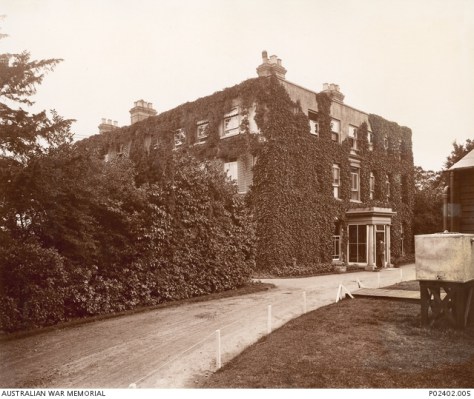
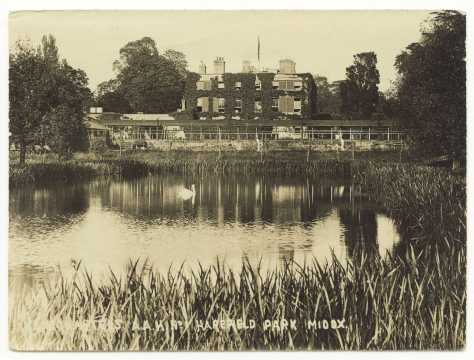
The 18th and 19th centuries saw the growth of several estates on which country houses were built, including Belhammonds, also known as Harefield Park, a three-storey, seven-bay mansion dating from the 1710s. Two centuries later it became the orginal home of Harefield Hospital.
I quote from the Yorkshire Post and Leeds Intelligencer on 23rd August 1918: ‘An agricultural correspondent tells of an extraordinary sale of farm stock today, at Harefield, Middlesex, a place so out of the way – nearly three miles from a railway station – that, till the selection of a local mansion as an Australian hospital, it was not known even to Londoners’.
These words tell us that Harefield Park, now in the London Borough of Hillingdon, was as remote as anywhere, but decades later this country house was to become world famous.
The earliest records of this historic mansion, sometime called Bellhammonds, dates to 1306. Amongst the evidence pertaining to the estate at this period, was a deed endorsed Knights Cortes, ‘whereby Prior Alexander and the Convent of Harley granted this Manor in Harefield, with all their lands in Harefield and Rykemesworth, to Richard Weltekart, of Louth, Thomas, his son, and Florence, the wife, to hold to them, and the heirs of Thomas, of the chief Lords of the fee forever, paying one hundred marks for the same’.
Harefield Place was the creation of George Cooke, the chief prothonotary of the Court of Common Pleas, the first of the Cookes who settled at Harefield, after his marriage in 1700. He created the estate after buying an ancient house called Ryes, or Rythes, and about 700 acres of land, from John Stanyan Gent, in February 1704.
Before his death in 1740, he built the present house, planted the ornamental timber, made the garden, and added about 200 more acres of land, bought at different times. Amongst his purchases was a small tenement, with stables and orchards, with three acres of land, called Bellhammonds, which he bought in 1713. He then gave that name to his own house. In ancient records, the name of Bellhammonds and Bellhackets frequently appeared as landowners in the village.
In 1750, his son, George Cooke, M.P. for Middlesex, added several farms with about 400 acres, and the mills on the River Colne, which he purchased from Sir Robert Newdigate. In 1758, he bought the Evesden Farm and fishery from William Ashby, of Breakspears. In 1824, General Sir George Cooke, his grandson, added the farm called Weybeards, or Hammonds, which he purchased from the executors of Mr R.G. Spedding, once the manager of the Copper Mills.
It was about this time that the estate came to be known as Harefield Park.
Sir George Cooke died suddenly at his chambers in the Temple in 1740, and lies buried at Hayes, where he was also Lord of the Manor. On his death, and his brother, Sir Henry, the property descended to his nephew, Mr William Frederick Vernon, who prepared a complete history of Harefield for private circulation.
The park was well timbered, and commanded extensive views of the Colne Valley. Prominent in the grounds was a fine grove of ilex of considerable size. Close to the house and south of the terrace was a large statue in white marble of Sir George Cooke, the founder of the estate, long thought to be the work of John Michael Rysbrack, but later attributed to Sir Henry Cheere, 1st Baronet, a renowned sculptor and monumental mason.
A full-length picture of George Cooke, painted by John Vanderbank in 1726, hung in the billiard room of the mansion, and many other valuable pictures were left behind by the Cooke family.
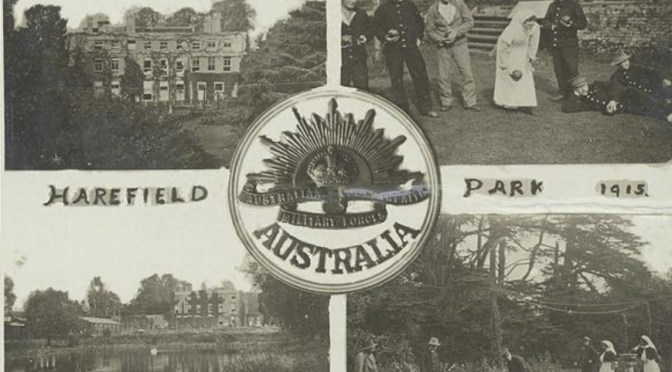
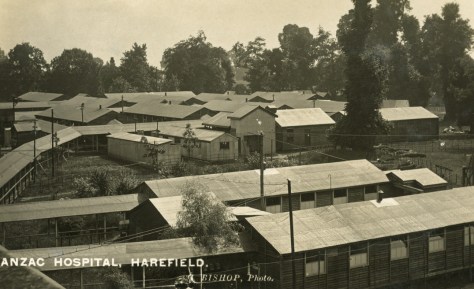
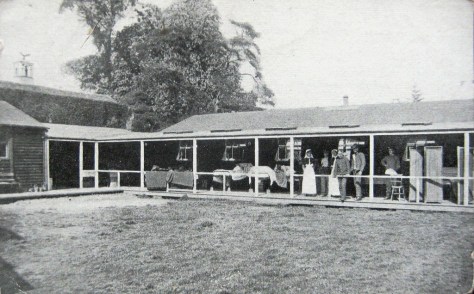
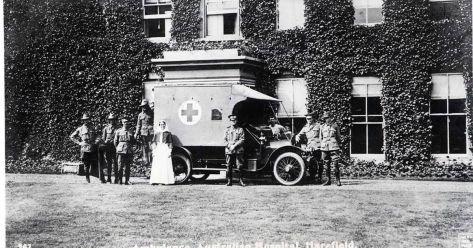
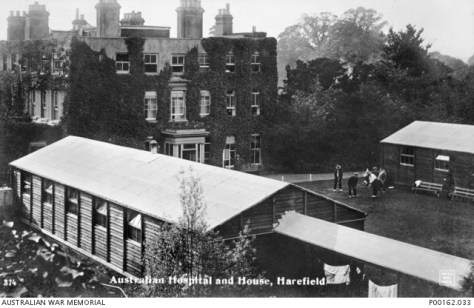
At the start of the 20th century, Harefield Park was in the possession of Mr Charles Billyard Leake, who owned extensive sheep farms in Australia. Shortly after the outbreak of the First World War, he offered his house and estate to the Australian Government as a convalescent hospital for the overseas forces. From 1915, the house became the No.1 Australian Auxiliary Hospital, the grounds around the mansion arranged with many huts, in all accommodating about two thousand men. During the occupation, it was visited by King George V, Queen Mary, the Duke of Connaught, and Mr Billy Hughes, the Prime Minister of Australia.
In November 1914 Mr and Mrs Charles Billyard-Leake, Australians resident in the UK, offered their home, Harefield Park House and its grounds, to the Minister of Defence in Melbourne for use as a convalescent home for wounded soldiers of the Australian Imperial Forces (AIF).The offer was accepted by the Commonwealth Defence Department and the property became the No. 1 Australian Auxiliary Hospital in December 1914. It was the only purely Australian hospital in England.The Hospital consisted of Harefield Park House, a 3-storey plain brick building, some out-buildings and grounds of some 250 acres.
In 1919, Middlesex County Council bought Harefield Park to provide additional sanatorium accommodation for the Middlesex County Hospital for the use of tuberculosis patients, with the Government contributing £38,400 towards the cost.
What a difference one hundred years makes!
At first, the medical and nursing staff comprised one Captain from the Australian Army Medical Corps, one Sergeant, one Corporal, four Privates (as wardsmen and orderlies), one Matron and five Nursing Sisters. The Medical Superintendent was to be under the supervision of the High Commissioner.The first 8 patients arrived on 2nd June 1915. By 22nd June the Hospital had 170 patients and extra huts were built. The first operation was performed in July. In August, when the Hospital had 362 patients, King George V and Queen Mary visited for two hours, speaking to every patient confined to bed.As the war progressed the Hospital became a general hospital. At the height of its use it accommodated over 1000 patients and the nursing staff had expanded to 74 members.
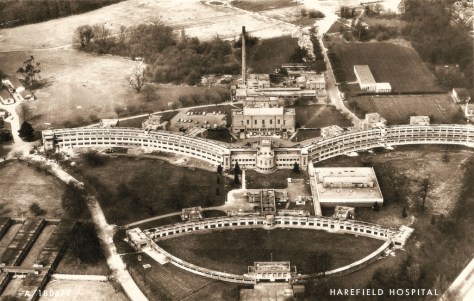
After becoming part of the NHS in 1948, Harefield first became a general hospital and then a specialist heart and lung centre. Ground-breaking work, led by Professor Sir Magdi Yacoub in the latter part of the 20th century, included the first successful heart transplant in 1980 followed by the world’s first combined heart and lung transplant in 1983. This led to Harefield Hospital having the largest transplant programme of its kind anywhere in the world.
In 1998, Harefield Hospital merged with Royal Brompton Hospital, Chelsea, to become Royal Brompton & Harefield NHS Trust before achieving Foundation Trust status in 2009. The organisation is now referred to as Royal Brompton & Harefield NHS Foundation Trust.
Work started on a more permanent structure in 1935 and the new building was opened on 8 October 1937 by the Duke of Gloucester, with many of the wards featuring large open areas to give patients access to the fresh air. The hospital joined the National Health Service in 1948.
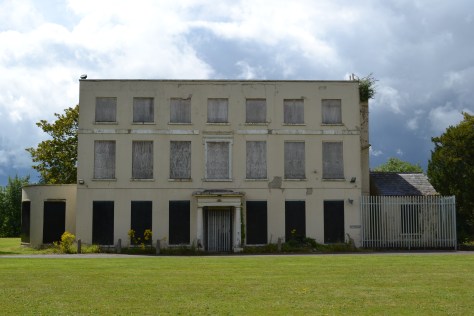
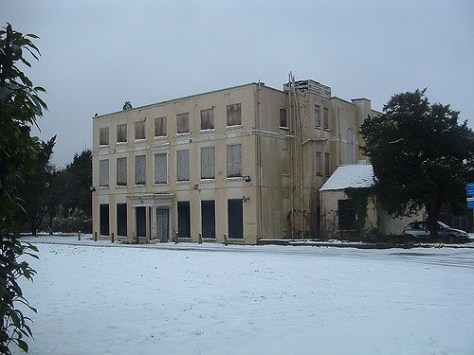
Grade II* listed Harefield Park mansion provided many years of service, but soon became lost on a rapidly expanding site. It was last used as accommodation for Harefield Hospital’s medical staff and is still standing, although it has become a long-serving entry on Historic England’s ‘Buildings at Risk’ register. According to the list, the house is vacant and in very poor condition, the building is propped-up and a temporary roof is in place.
The eastern elevation with the main entrance of the old Harefield Park mansion house, is now sadly all boarded-up. The building, with its stables and coach house, is Grade II*-listed.Bleak times. It is hard to imagine the splendour once associated with the house. The western side, overlooking the lake, not seen here, is supported by scaffolding, presumably to prop-up the house.




 HOUSE AND HERITAGE