All posts by Delicto

COUNDON COURT

A house built by a bicycle pioneer that quietly slipped into unfamiliar surroundings.
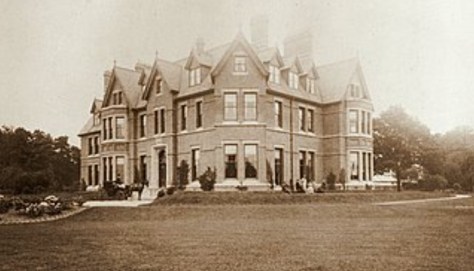
Coundon Court 2
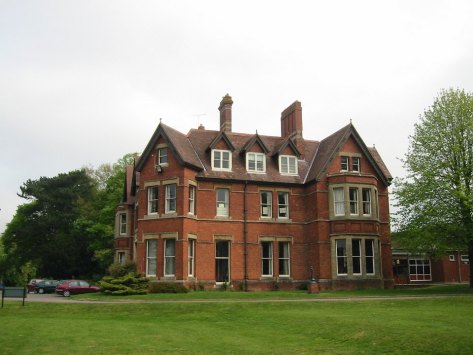
The glory days of Coundon Court, built in 1891 for George Singer by Charles Gray-Hill. (P. Riley).

The death of Mrs Singer at 25, Harley House, Regent’s Park, London, on 3rd March 1918, was insignificant. She was the widow of the late Alderman George Singer, of Coventry, for three years Mayor of the city.  However, for the people of Coventry, she would be remembered for the prominent part in her civic life and her performance as Mayoress during the years, 1891, 1892 and 1893. Mr and Mrs Singer broke new ground in respect of the function of Mayor and Mayoress.

That period saw the beginning on the part of wealthy citizens to live outside the city, and Coundon Court, their mansion, a few miles out of Coventry, was frequently the scene of social gatherings of members of local governing bodies, whilst garden parties were frequently held during the summer months. After the death of her husband in 1909 she left the house behind.

The one hundredth anniversary of her death allows us to investigate Coundon Court, a house that has slowly melted into its surroundings ever since.

Coundon Court was built in 1891 for George Singer by Charles Gray-Hill. It was constructed on land that was once part of Coundon Farm and bought for a modest £5,433.  
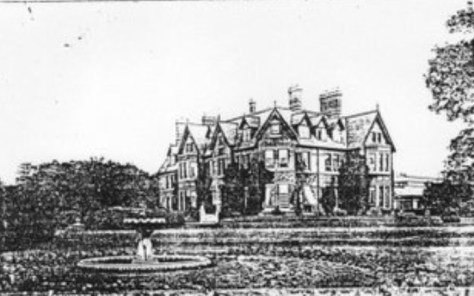
Coundon Court 11
An engraving of Coundon Court, possibly made for Charles Daniel Miller. (P. Riley).

George Singer was at the top of his game. Born at Stinsford in Dorset in 1847, he served his apprenticeship at John Penn and Sons, marine engineers, Greenwich, and in 1869 moved to Coventry to take charge of sewing-machine production at the Coventry Machinist Company. The company made some of the first bicycles in Britain and it was here that Singer learnt his trade.  A business of his own in Leicester Street was replaced in 1874 by a cycle factory in Canterbury Street, known as Singer and Co, that eventually became one of the world’s biggest cycle manufacturing businesses. Singer paid attention to the smallest detail and his cycles were built with quality in mind.
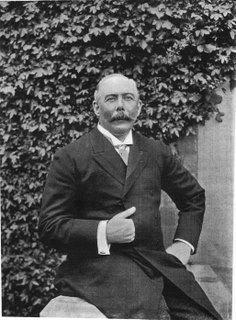
George Singer
Mr George Singer (1847-1909). (P. Riley).

In 1896 the cycle industry reached its apex. Factories were so busy that even shareholders couldn’t get cycles in less than three months after giving the order. Shares reached great highs and businesses were bought for prodigious sums. Singer and Co was acquired by Mr F. T. Hooley for £540,000 but George Singer still headed the business.

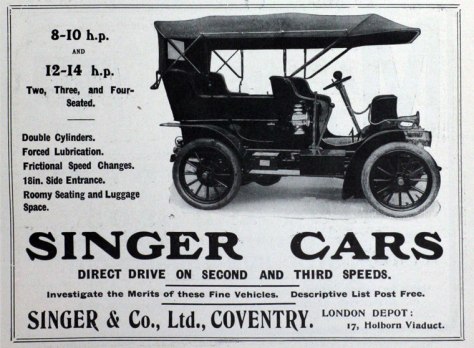
Later he added motor-cycles to his empire and founded the famous Singer Motor Co in 1901, a marque reminiscent of the golden days of British motoring. He was elected to the city council in 1881 but resigned in 1898 to concentrate on philanthropy and charity work.
Im19050909Auto-Singer1

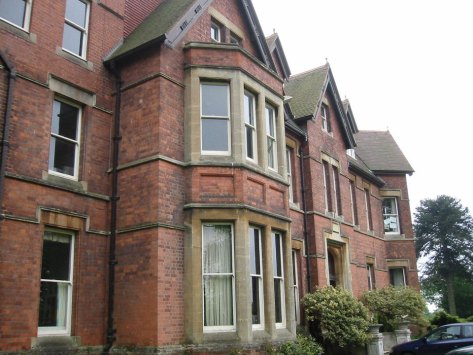
According to the Warwickshire Industrial Archaeology Society the three-storey house of red brick, with incorporated stonework, looked rather severe from the outside. When built it was set in over 50 acres of land complete with three cottages, stables and an impressive gated entrance called Holly Lodge.

In January 1909 George Singer took ill while dining at Coundon Court and died soon after.
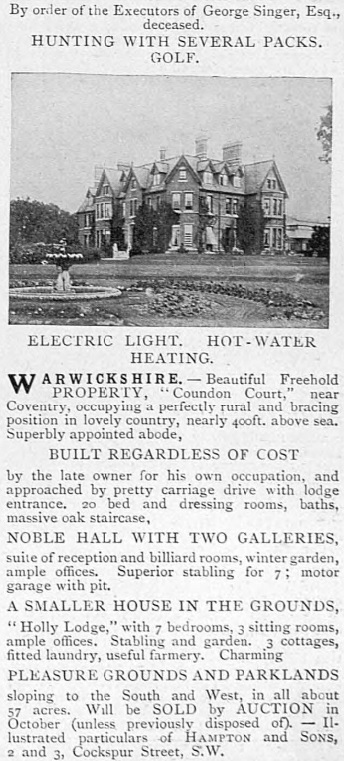
The Bystander 8 Sep 1909 (BNA)
Sale notice. The Bystander, 8 Sep 1909. (British Newspaper Archive).

Coundon Court was bought by Charles Daniel Miller, chairman and joint managing director of the Newdigate Colliery (1914) Ltd and Bedworth Coal Supply Ltd. Miller had served in the army during World War One and was a noted rifle shot, captaining the English team on occasions, and a regular competitor at Wimbledon and Bisley.  He filled Coundon Court with his many trophies as well as his passion for old engravings, particularly reproductions of George Morland’s paintings. To locals the house became a favourite rendezvous for fetes and summer picnics.

Miller died in 1944 and his wife, Bessie, stayed at Coundon Court until her own death in 1946.
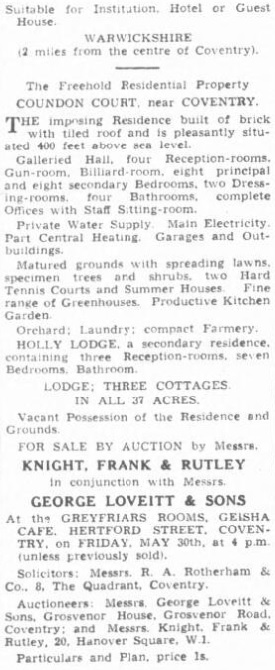
Leamington Spa Courier 2 May 1947 (BNA)
Sale notice. 2 May 1947. (British Newspaper Archive).

In August 1947 Coundon Court was bought for £15,000 by Mr Harold John Finn and his wife, proprietors of the ‘Sunnyside’ nursing home at Radford. The house was converted into another nursing home with 22 bedrooms available for maternity cases.  It opened to great fanfare in early 1948 and was anticipated to eventually accommodate 44 patients.

The Coundon Maternity Home lasted only a couple of years, probably due to the incorporation of the National Health Service which offered free maternity care to patients. It was obvious that another use was needed for Coundon Court and Harold Finn started taking up to 50 paying guests as long-term boarders.

Finn had ambitions for the parkland and made three applications to Coventry Council to use it as a caravan site. Since 1925 the council had deemed the area as ‘Green Belt’ land and each application was rejected claiming the 13 acres of rich farming land should be used for agricultural purposes. This didn’t deter Finn and in January 1951 he allowed the first caravan onto the property. Within months the number of caravans had reached 65 and the council referred to it as being like a ‘shanty town’. There were no public facilities and after his third application was rejected Mr Finn unsuccessfully appealed to the Minister of Housing and Local Government. It came as no surprise because Coundon Court had gained a notorious reputation for its unruliness and even the odd murder. By 1952 local newspapers were referring to the country house as Coundon Court Hostel.

Mr Finn was frustrated as each attempt to make money came to nothing. However, in November 1952 the Coventry Education Committee suggested they were willing to buy Coundon Court to create a new county secondary school for about 600 children. If Mr Finn thought he was going to make a profit on the deal then he would be disappointed when the house exchanged hands for just £4,000.

The contents, nothing of any value, were sold at auction in April 1953 and the council made plans to build at short notice a new girls’ grammar school for 120 scholars using the house and the addition of temporary buildings. It opened that year and the council later bought the lodge and grounds for sports pitches and gardens. It became a comprehensive school in 1956 and one of its first pupils was Mo Mowlam, later to become the Secretary State for Northern Ireland.

Coventry Evening Telegraph - 18 Apr 1953 (BNA)
From the Coventry Evening Telegraph, 18 Apr 1953. (British Newspaper Archive).

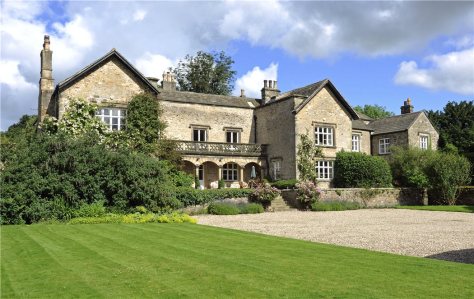
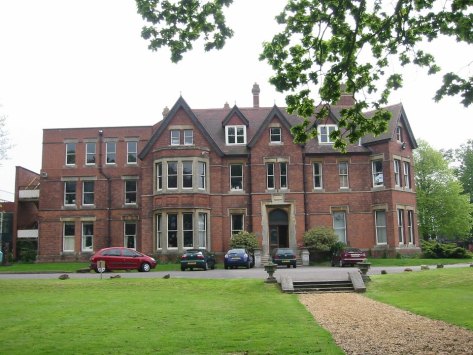
The house still stands, known as ‘Old House’, and much of the original woodwork from Singer’s days remains. The site has been significantly developed and is now known as Coundon Court School.

There are modern-day images of Coundon Court available to see on the Warwickshire Industrial Archaeology Society website.
Coundon Court 3
The modification to the left of ‘Old House’ was not the most sympathetic. (P. Riley).
Coundon Court 5
The Victorian House was of plain design by the architect Charles Gray-Hill. (P. Riley).
Coundon Court 4
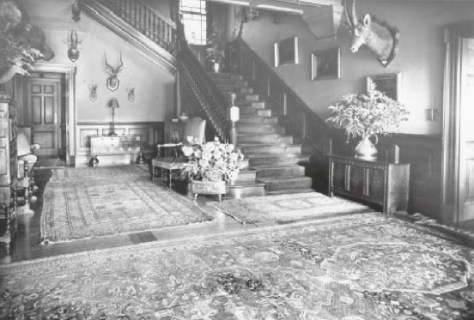
The interior to Coundon Court is far more elaborate than the ‘severe’ exterior. (P. Riley).


BLACKFRIARS HAUGH

A century ago nobody wanted to take on a big house. 

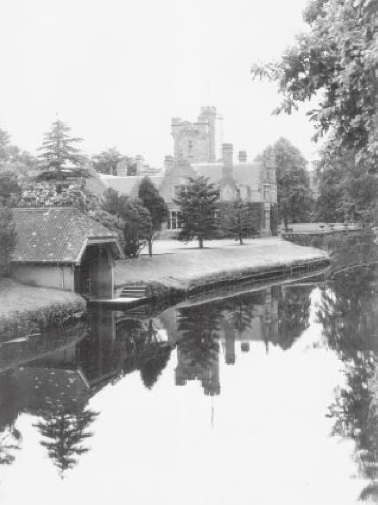
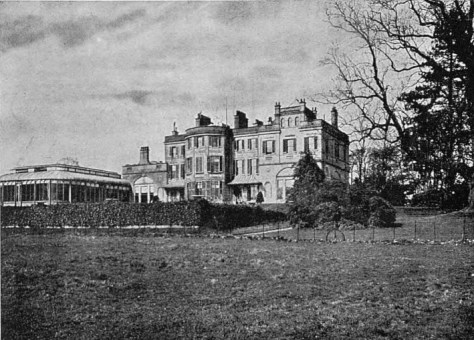
The Haugh (Elgin from Old Photographs)
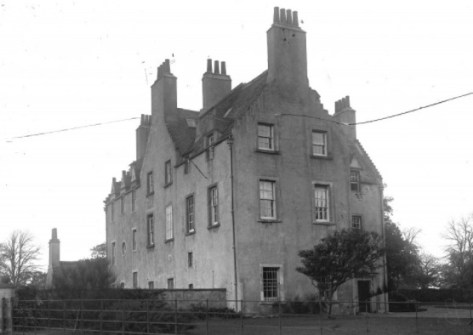
The Haugh was built on the west of the site of Blackfriars Haugh, a 13th century property demolished in 1750. (Elgin from Old Photographs).

A century ago country mansions were out of vogue. This was more so in Scotland where a large number of big houses and estates were sent to market. There was no guarantee that they would sell. This was highlighted on the 8 March, 1918, by the Aberdeen Weekly Journal who reported on the mansion house of Blackfriars Haugh.

‘In ordinary times the offer of the mansion house of Haugh would have been considered a bargain at £3,000. Such was the upset price it was offered at on Thursday last, but there was no response. Along with the house, which is one of the most beautiful and attractive residences in Elgin, there are 10 acres of policies. The sale has again been adjourned’.

The Scotsman - 23 Feb 1918 (BNA)
From The Scotsman, 23 February 1918. (The British Newspaper Archive).

The house was built for William Grigor in the mid 19th century and later remodelled in ‘fruity’ baronial style in 1882 for Mr A.G. Allan, a solicitor, by the architect William Kidner. It had become a millstone after the death of its then-owner Mr John Macdonald, a retired tobacco manufacturer, formerly of the firm of J & D Macdonald. The firm was amalgamated with the Imperial Tobacco Company of Great Britain and, following his demise in 1911, Macdonald left estate worth £105,684 and shares amounting to £93,311.

Blackfriars Haugh failed to sell on several occasions and was seemingly destined for the demolition men.

The Haugh 1 (Elgin from Old Photographs)
In 1882 the prominent solicitor A.G. Allan commissioned William Kidner to remodel The Haugh. Kidner had spent some time in Shanghai and oriental influence is hinted at in the design. (Elgin from Old Photographs).

Diminishing in value, it did finally find a buyer in August 1918, but the timing was poor. Mr Hendry Russell Randall, of the Royal Worcester Warehouse Co, London, bought Blackfriers Haugh and its policies. He fitted the house up as a convalescent hospital and offered it to the American Red Cross for the benefit of wounded American officers and men.

The Aberdeen Press and Journal enthused about the proposal.

‘The house occupies a fine situation on the banks of the Lossie, and the grounds are about ten acres in extent, with croquet lawn, tennis court, and bowling green. The interior has been fitted up with every modern convenience, and there are well stocked fruit and vegetable gardens. The river offers facilities for boating and fishing, and Mr Randall intends to provide a motor car, so that the wounded soldiers can visit any of the beauty spots in the district’.

The Haugh 2 (Elgin from Old Photopgraphs)
The entrance to The Haugh during the times of the Bibby family. (Elgin from Old Photographs).
The Haugh 3 (Elgin from Old Photographs)
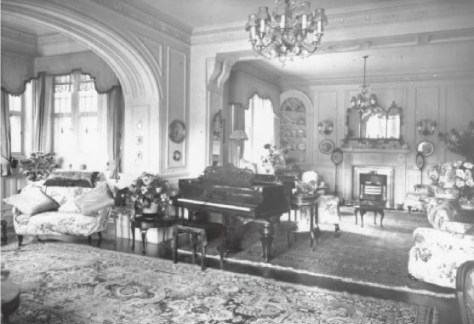
The Drawing Room. It is understood these photographs were taken about 1946, when The Haugh was gifted to the town. (Elgin from Old Photographs).
The Haugh 4 (Elgin from Old Photographs)
Landscape views decorate the walls in this bedroom at The Haugh. (Elgin from Old Photographs).
The Haugh 5 (Elgin from Old Photographs)
Books, flower arrangements and comfortable furniture. (Elgin from Old Photographs)

It is doubtful whether it was ever used as a hospital. The end of the war in November effectively scuppered plans with wounded American soldiers being shipped safely back home instead. In 1919 Blackfriars Haugh was back on the market once again.

The mansion finally became a family home again in the 1920s when it was bought by Mr H.C. Bibby. The family remained until the 1940s when it was gifted to the people of Elgin by Mrs Katherine Bibby. By her wish it was to be used to rehouse patients in the Munro Home for Incurable Invalids. Part of the house was also set aside as an eventide home for old men and women belonging to Elgin and Morayshire. In the end it was actually used as a pre-nursing training school and later as a music department for the Elgin Academy

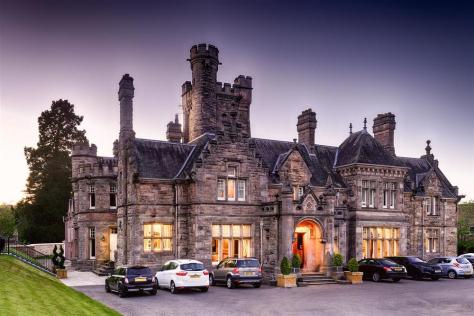
But what of the house today? The property still exists but is no longer known as Blackfriars Haugh (or even its shortened title, The Haugh). Nowadays the Category B listed house provides a very different existence as the Mansion House Hotel & Country Club.

Blackfriars Haugh (Elgin) (Mansion House Hotel & Country Club)
The Haugh is now better known as the Mansion House Hotel & Country Club.

LITTLE GROVE

The story of a country house that almost became home to Winston Churchill. Instead it was ‘swallowed by suburbia’ and lost forever.

Little Grove - Illustrated Sporting and Dramatic news 5 Aug 1911 (BNA)
The unknown house. East Barnet – on high ground – An imposing mansion with extensive pleasure grounds, lodges, stabling, cottages, farmer, and beautiful parkland, in all about 112 acres. Suitable for private residence, or as an Institution. The surrounding land is suitable for profitable development. Price exceedingly low. From the Illustrated and Dramatic Sporting News. 5 August 1911. (The British Newspaper Archive)


Little Grove, East Barnet, might have been famous had it not been for a change of mind by Winston Churchill. In June 1922 the then-Secretary of State for the Colonies was looking for a country estate to buy. It was widely rumoured that he had set his sights upon Little Grove, in Hertfordshire, with one newspaper stating that
‘it was highly likely that the deal will be carried through’. In the end, Churchill bought Chartwell in Kent, and Little Grove headed into obscurity instead.

This house came to my attention after coming across a sale advertisement in an August 1911 copy of the Illustrated Sporting and Dramatic News. It had been posted by Messrs. Trollope’s Register of Houses and listed an imposing mansion with extensive pleasure grounds and 112 acres of beautiful timbered parkland at East Barnet. That was about all it said about the house, other than it might be suitable for private occupation, or as an institution.

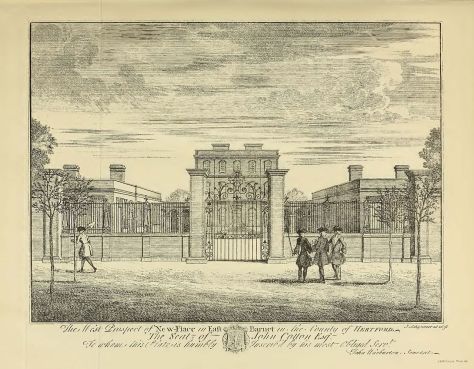
The identity of the house involved a painstaking search of images of old houses around East Barnet. It was eventually found to be Little Grove, built in 1719, by John Cotton of Middle Tempest and originally called New Place.  Built of red-brick, later covered with stucco, it replaced a house dating from the reign of Philip and Mary. The first mansion (called Daneland) was the residence of Lady Fanshawe, the widow of Sir Robert Fanshawe, the Cavalier, whose heroic rescue of her husband from prison made her famous. It didn’t take long for John Cotton to change its name back to Little Grove.

The_West_Prospect_of_New_Place_East_Barnet
The West prospect of New Place in East Barnet, Hertfordshire. A view of the new house built in 1719 that John Cotton named New Place.

After passing into the hands of Fane William Sharpe it was sold in 1767 to Sir Edward Willes (1723-1787), a barrister, politician and judge, who became Solicitor General for England and Wales. The following year he  was reputed to have paid £700 to Capability Brown for work on its extensive parkland.

In the later years of the 18th century it was owned by David Murray (1727-1796), 7th Viscount Stormont, later 2nd Earl Mansfield. After his death it appears to have been occupied by John Tempest, a landowner, Tory Politician and MP of Wynyard in County Durham. His widow remained until 1817 and Little Grove was bought by Captain Colman Hickman.

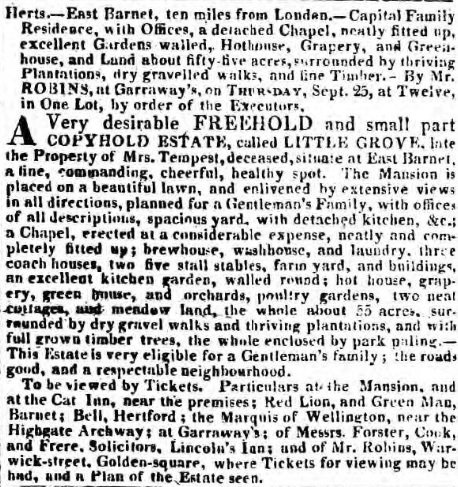
Morning Post 3 Sep 1817 (BNA)
Auction notice for Little Grove. From the Morning Post. 3 September 1817. (TheBNA)


By the 1830s the estate was home to Frederick Cass (1787-1861), Magistrate, Deputy Lieutenant of Hertfordshire and High-Sheriff in 1844-45. It is likely that Little Grove had been bought by his father, William Cass, and Frederick later moved here from Beaulieu Lodge. He died at the house in 1861.

It was occupied by Alexander Henry Campbell (1822-1918), JP for Hertfordshire, Deputy Lieutenant of Cornwall and elected MP for Launceston until 1868. His departure from politics also led to him leaving Little Grove. The estate failed to sell at auction and remained unoccupied until 1871.

It is possible that Campbell had rented Little Grove from Martha, the widow of Frederick Cass, as there is evidence to suggest that the family had links to the estate up until the 1890s. Their son, Frederick Charles Cass (1824-1896), Rector of Monken Hadley in North London, was often associated by name with Little Grove.

Sigismund James Stern (1807-1885) moved into the house in 1871. He was a German-born Manchester cotton merchant who later turned his hands to banking in London. William Cass had described him as a ‘merchant and banker of London’.

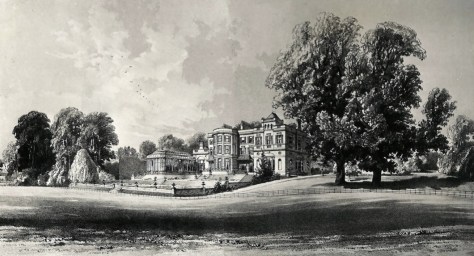
Little Grove, South Front. Published by Kell Brothers of Holbutn c1860s (Wikipedia)
An engraving of Little Grove. The south front as published by Kell Brothers in the 1860s.

At the turn of the 20th century the house and its 112-acre estate was put on the market but once again struggled to sell. In 1910 Messrs. Trollope and Sons wrote to East Barnet Valley Urban District Council drawing their attention to the Little Grove estate for a public park or recreation ground. ‘The price we are now in a position to accept is likely to be more favourable to your Council than it would later on, when the neighbourhood will have developed to a still larger extent, with the consequent appreciable rise in the value of the land’. The council wasn’t convinced and rejected the idea.

From 1907 the house remained untenanted, save for the billeting of 500 soldiers during World War One. It was in a dilapidated condition with dry rot setting in. However, in 1919 it was bought by the well-known Miss Shirley Kellogg, an American actress and singer, who had found fame in the West End, most notably at the London Hippodrome. She was, in fact, married to Albert Pierre de Courville, a theatrical producer and later film director. She immediately proposed changing its name to Shirley’s Grove and set about restoring and renovating the house.

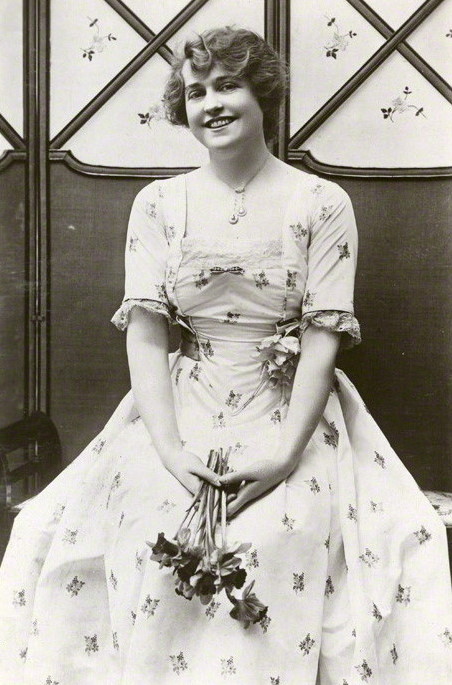
NPG Ax160297; Shirley Kellogg by Wrather & Buys, published by J. Beagles & Co
Shirley Kellogg (born 27 May 1887 in Minneapolis, Minnesota) was an American actress and singer who found greater success in Britain than in America, mostly in revue. (NPG)


The newspapers reported that Shirley Kellogg had spent almost £10,000 on the house but whilst the work had been completed it appears that the de Courville’s hadn’t parted with much money. In November 1920, Messrs. Maple and Co sought to recover £8,000 it was owed for repairs and decoration of Shirley’s Grove. In a High Court hearing, in front of Mr Scott, the official referee, the defendants alleged defective workmanship and excessive charges. Judgement was given to the plaintiffs for £6,966 of which £3,000 had already been paid, and a further £3,000 was awarded to the plaintiff’s solicitors.

As you might expect there were cheery weekend parties at Shirley’s Grove and on one occasion there was a fire, during which Shirley appeared in a dressing-gown encouraging the efforts of those attempting to put the fire out.

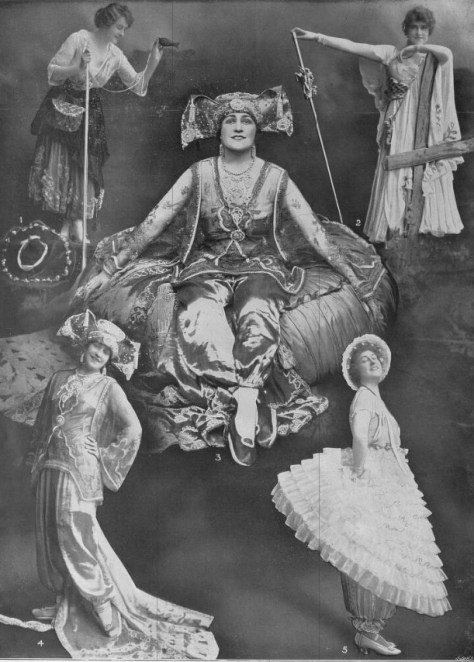
Shirley Kellogg in Zig-Zag at London Hippodrome (ISDN - 17 Apr 1917)
Shirley Kellogg, featuring in ‘Zig-Zag’ at the London Hippodrome. From the Illustrated Sporting and Dramatic News. 17 April 1917. (The British Newspaper Archive)


It might not be theatrical coincidence that stories about Little Grove started to appear around this time. There were tales of a ghost, a moat and buried treasure. Column inches were filled with the ancient story of Geoffrey de Mandeville, who owed his power and wealth from being the Constable of the Tower, who levied war upon the King and was attained for treason. According to most historians, he was killed at Mildenhall in Suffolk in 1444, but others said he was concealed in the grounds of Little Grove and fell into a moat, where he was drowned. His ghost was said to walk the parkland, being apparently disturbed by the fact that in the deepest part of the old moat, there was a great chest of gold and gems, which no one could carry away because it was bound to the bottom by iron chains.

To add further mystery there were tales of a hidden chamber and secret passages in which a coat of arms of Oliver Cromwell, elaborately engraved in oak, was discovered. Other valuable works of art were said to have been found, and then the infamous moat was said to have figured in Sir Walter Scott’s ‘Fortune of Nigel’.

With such fanciful stories, we might be forgiven for questioning the integrity of Winston Churchill’s interest in Shirley’s Grove. The story emerged in 1922 when Shirley Kellogg was living the high-life at her restored mansion. However, the estate did adjoin Trent Park, Sir Philip Sassoon’s estate, so the attraction might have been there after all.

Shirley Kellogg’s eventful stay at Shirley’s Grove lasted just five years. In 1924 she was divorced from Albert and she travelled to Hollywood to try to break into pictures. The house remained unoccupied and was sold at auction in 1927. Its pleasure grounds had been reduced to 3-acres, the remaining grounds probably sold off to developers in the preceding years. Whilst the house may not have been an attractive proposition the auction notice made specific detail of ‘three exceptionally fine building sites’.

In 1931 it was sold on behalf of the executors of Mr J.J. O’Brian and, the following year, the mansion was demolished to make way for a housing estate. Its setting has been ‘swallowed by suburbia’ but those residents living at the top of Daneland, just off Cat Hill, in East Barnet, might want to look out for the wandering ghost of Geoffrey de Mandeville.

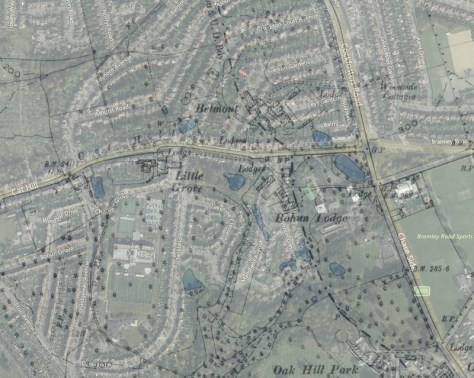
Little Grove Map
The site of Little Grove, East Barnet, super-imposed with a modern-day street map. (NLS)
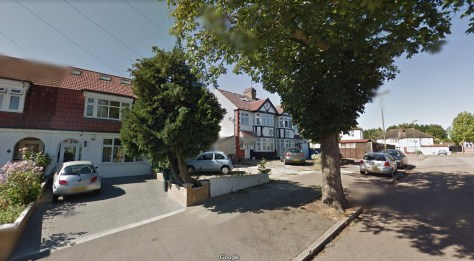
Daneland
These residents of Daneland, off Cat Hill, East Barnet, might not realise they live on the site of Little Grove. Demolished in 1932. (Google Maps)

Note: East Barnet was in Hertfordshire until 1965 when it became part of the London Borough of Barnet.

RICKMANSWORTH PARK HOUSE

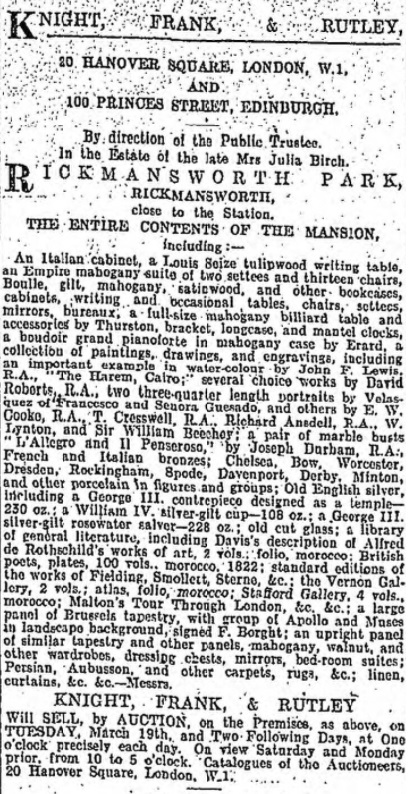
In February 1918 the  entire contents of Rickmansworth Park mansion were advertised for auction by the Public Trustees in the Estate of the late Mrs Julia Birch.

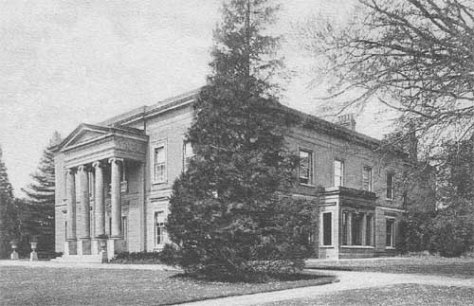
Rickmansworth Park 1 c1920 (Matthew Beckett)
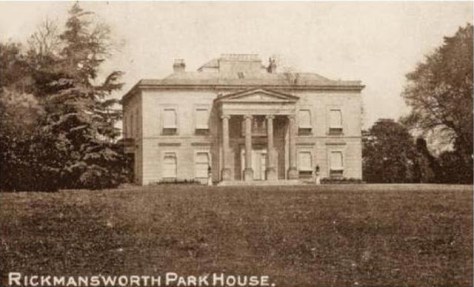
Rickmansworth Park House, Hertfordshire. It was altered between 1864 and 1880. Sadly the house was demolished in 1927-28 to make way for a new school. (Lost Heritage)

The long list of furniture and fine arts provided a clue as to the wealth associated with the house. However, her death cast a shadow on Rickmansworth Park and it is questionable as to whether it was fully occupied again.

The Scotsman 9 Feb 1918
Taken from From The Scotsman. 9 February 1918. (The British Newspaper Archive).

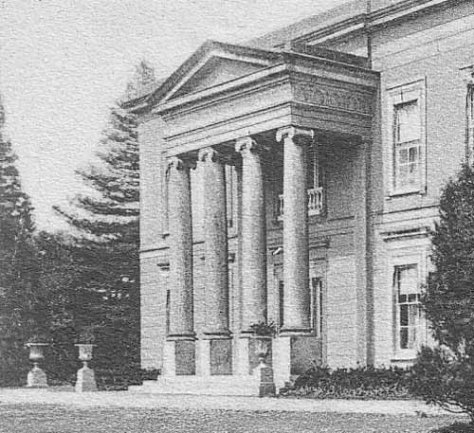
Rickmansworth Park dated back to about 1805, built by Henry Fotherley Whitfield (d.1813) and built in the middle of Bury Park. It was described as a two-storey building with a five-bay front and dominated by a giant Ionic portico. After his death it passed to his widow, Mary, later wife of Thomas Deacon, who sold it in 1831 to Mrs Temperance Arden (1763-1843). It passed to her son Joseph Arden (1799-1879) and was sold, on his death, to his son-in-law, John William Birch (1825-1897). He had married Julia Arden (now Birch) (c.1830-1916), daughter of Joseph Arden and Mary Ann Munro, and was a partner of Messrs. Mildred, Gozenseche and Co, merchants, of St Helen’s Place, London. He was one of the directors at the Bank of England and became its Governor in 1878-90. ¹

Rickmansworth Park 2 (Matthew Beckett)
Rickmansworth Park House. Built about 1805 for Henry Fotherley Whitfield. Its Ionic portico at the front of the house gave it a grand appearance. (Lost Heritage)

Following his death in 1897 he left personal estate worth £65,330. Julia Birch received £1,000 as well as pictures, engravings, plate silver, jewellery, horses and carriages as well as live and dead stock on the estate. She was also left Rickmansworth Park for her ‘use and enjoyment’, and which, subject to her occupation of the house, was left in trust for sale, and the proceeds after her death split amongst his sons. ²

The oldest of these was John Arden Birch (1853-1896) but, seeing as he had died a year earlier, the house wasn’t sold after Julia Birch’s death in 1916. Instead, it appears to have passed to his wife, Charlotte Mary Leycester Arden (1858-1935).

Charlotte married a second time in 1905. Her new husband was Walter Bulkeley Barrington (1848-1933), 9th Viscount Barrington of Ardglass. His home was at Beckett, Shrivenham, in Berkshire, and the couple appear to have spent most of their time in residence here. As late as 1924 it was said that Rickmansworth Park was going to be their permanent home, as Lord Barrington had decided to give up Beckett, his fine Berkshire seat. It is not without reason that Rickmansworth was ‘entirely renovated and modernised’ in readiness for the move, but it appears that Beckett wasn’t given up after all. In 1925 Lady Barrington was said to be ‘desirous’ of letting Rickmansworth Park for the summer but they had already decided about the property. ³

Rickmansworth Park 3 (Nicholas Kingsley)
Rickmansworth Park House from an old postcard. The architect of the house was never determined. (Nicholas Kingsley/Landed Families)

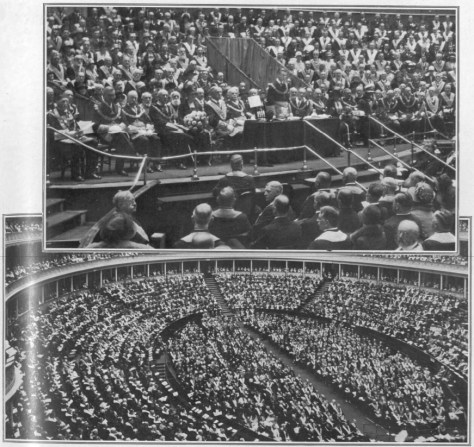
In May 1927 a concert was held at the Albert Hall, London. It was chaired by the Prince of Wales and over £200,000 was contributed by masonic orders. Its purpose was to raise funds for the Royal Masonic Institution for Girls whose Clapham school was no longer large enough for its requirements. After the concert they had the funds necessary to buy the Rickmansworth Park estate and its 204 acres of land. (The mansion was said to be in a poor state of repair but, as we have seen, this probably wasn’t the case). ⁴

The Sphere 28 May 1927
Masons building an empire with human bricks. The Prince of Wales, Provincial Grand Master for Surrey, and President of the festival at the Albert Hall. Over £200,000 was raised which would see the demise of Rickmansworth Park. From The Sphere. 28 May 1927. (The British Newspaper Archive)

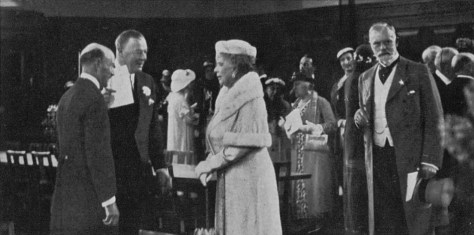
The first job at Rickmansworth was to demolish the grand old mansion, but it wasn’t until 1930 that the Duke of Connaught laid the foundation stone for the replacement building. Bizarrely, the ceremony involved the ‘scattering of corn, pouring wine and oil, and sprinkling salt on the stone’. The school still exists.  ⁵

The Sphere 7 July 1934
Making a round of inspection. Queen Mary at the new senior school of the Royal Masonic Institution for Girls which she opened at Rickmansworth Park. It had accommodation for 400 students and staff and took the place of the old school at Clapham which had been in use for 82 years. From The Sphere. 7 July 1934. (The British Newspaper Archive)

The Viscountess Barrington died at Beckett in October 1935 and was celebrated for being a member of the Shrivenham Settlement and Welfare Scheme, in which houses were built for ex-servicemen. Ironically, she died while her book ‘Through Eighty Years (1855-1935): The Reminiscences of Charlotte, Viscountess Barrington’ had just been sent to the printers. It was published by John Murray in 1936.

Royal Masonic School for Girls (jacqueline Harvey)
The Royal Masonic School for Girls. To ensure that the site would be suitable for many years to come, a lot of thought was put into the design of the new school buildings. It was designed by John Leopold Denman, an architect from Brighton. (Jacqueline Harvey)

References:-
¹ Nicholas Kingsley (Landed Families)
² Morning Post (5 June 1897)
³ Dundee Courier (14 August 1925)
⁴ The Sphere (28 May 1927)
⁵ Gloucester Citizen (17 July 1930)

ROOKSNEST

One hundred years ago, Rooksnest, a country house at Godstone, found itself the subject of a scandal involving an MP.

Oughborough (Stephen Richards)
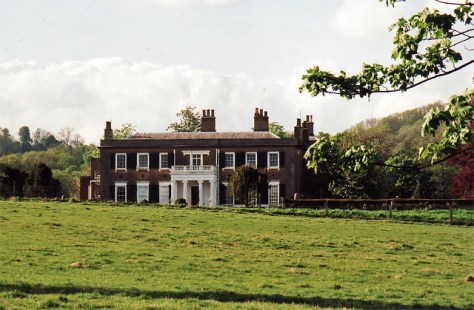
Rooksnest was built between 1775 – 1781 on land that once belonged to Tandridge Priory. The house was remodelled in the early 19th century. When a country house it was home to Sir George Gilbert Scott in the 1870s, during which time he undertook many of the church restorations in surrounding villages. (Stephen Richards/Geograph)

At one point, two years into the Great War, Britain had found itself with only six weeks’ worth of food and on the verge of starvation. However, it wasn’t until end the of 1917 that food rationing was introduced and by February 1918, general rationing was in force. Food hoarding was a real problem.  Authorities, as well as the general public, took a dim view of anyone engaged in such practices. Naming and shaming in the press was common, penalties were harsh and imprisonment a real possibility.

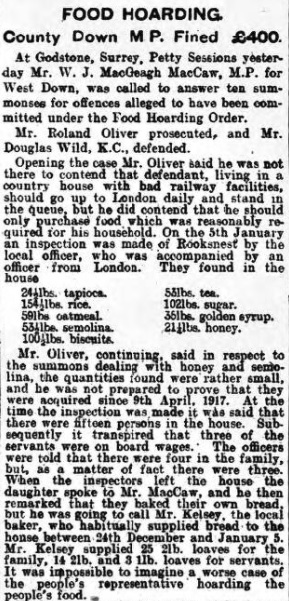
In February 1918, newspapers reported that Mr William John MacGeagh MacCaw, the MP for West Down, had been fined £400 under the Food Hoarding Order.  At Godstone Petty Sessions, Mr Roland Oliver, prosecuting, said: “It was impossible to imagine a worse case of the people’s representative hoarding the people’s food.” An inspection had been made at his home, Rooksnest, by a local officer who found a significant quantity of tapioca, rice, oatmeal, semolina, biscuits, tea, sugar, golden syrup and honey. Similar quantities were also found at his home at 103, Eaton Square, London. In his defence, Mr MacCaw said: “I think a reasonable supply ought to be kept. I don’t think I’ve neglected my duty in any way. I have a large body of people dependent upon me for food.” He was found guilty, fined and the food confiscated.

Larne Times - 18 April 1914 (BNA)
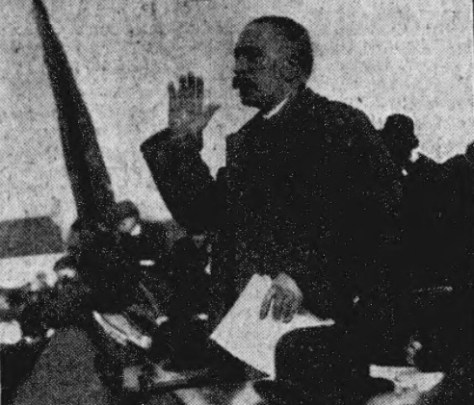
William John MacGeagh MacCaw (1850-1928). His election as MP for West Down in 1908 was memorable for the fact that he was in India – where he had extensive business interests – when nominated as Unionist candidate, and he was returned by a substantial majority whilst on his journey home. (The British Newspaper Archive)


Northern Whig 1 - 5 Feb 1918
The Northern Whig was one of many newspapers reporting the shame of William John MacGeagh MacCaw’s appearance in front of the Petty Sessions. From 5 February 1919. (The British Newspaper Archive)

Rooksnest is located at Godstone, built between 1775-1781, probably by Richard Beecher. It came into the possession of Charles Hampden Turner, a businessman with rope-making and dock interests, in 1817. It remained with the family for the next 100 years but was tenanted for large periods. Its most notable resident was Sir George Gilbert Scott (1811 – 1876), the Gothic revival architect associated with the building and renovation of churches and cathedrals, who was here from 1870.

William John MacGeagh MacCaw (1850 – 1928), the Unionist MP for West Down between 1908 and 1918, was another who rented the property. In early life he had gone to India where he joined the firm of Kettlewell, Bullen and Co (Calcutta and London), jute manufacturers, eventually becoming its principal partner. He also joined the Bengal Chamber of Commerce and lived there for 20 years. After his conviction he bowed out of politics in the General Election of 1918, called immediately after the Armistice with Germany, and died in Monte Carlo.

Ballymena Weekly Telegraph - 17 Mar 1928
William John MacGeagh MacCaw found time for pursuits of a literary and scientific character, and was elected a Fellow of the Royal Geographical Society, a Fellow of the Royal Colonial Institute, and a member of the Society of Arts. (The British Newspaper Archive)

Rooksnest was bought in the 1920s by James Voase Rank (1881 – 1952), a flour miller with Joseph Rank Ltd and brother of Joseph Arthur Rank, founder of the Rank Organisation. He renamed the house Ouborough after the Yorkshire town (Oubrough) where his father had started the flour business in 1875. After he died in 1952 the house eventually became Street Courte School, a preparatory school founded in Westgate-on-Sea in 1894 by J. Vine Milne, the father of author A.A. Milne. It closed in 1994 and eleven years later Ouborough and its parklands became the Godstone Golf Club.

James Voase Rank (Ouborough Kennels)
Ouborough was home to Ouborough Kennels, where James Voase Rank bred Great Danes, Guernsey cattle, thoroughbred horses and Irish Wolfhounds within 170 acres of parkland. (Ouborough – Five Nine)

SAUGHTON HOUSE

Saughton House 2 (Canmore)
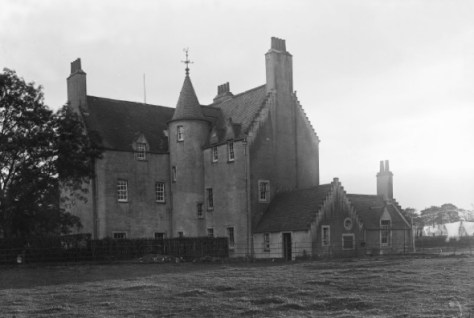
Saughton House was one of the finest old Scottish architectural mansions. (RCAHMS)

One hundred years ago, yet another mansion was lost to fire. The Daily Record reported that Saughton House, on the outskirts of Edinburgh, had been destroyed in a blaze that had broken out in the early hours of the previous day. Only the walls were left standing and a considerable number of valuable paintings and furniture had been lost. The house was occupied by Mrs De Pree whose husband, Major Hugo De Pree, was away on war service. ¹

Mrs Ruth De Pree, her three daughters, and servants, had been asleep when they were aroused by the smell of smoke at about four o’clock in the morning. It originated from a room in the third-storey and help was immediately summoned from adjoining farms. When the Edinburgh Fire Brigade arrived, the roof was blazing and soon fell in. A scarcity of water complicated efforts to rescue the house but allowed enough time to save a selection of valuable items. Among them was a painting of Field Marshal, Sir Douglas Haig, the uncle of Mrs De Pree, and a selection of much-prized letters from him. The Scotsman speculated on their future value: ‘They may some day form interesting historical documents of the great war’. (It was right. These letters survive in the archives at the National Library of Scotland). Only the blackened walls and a vaulted stone roof were left standing. ²

Saughton House - Daily Record - 2 Feb 1918
From the Daily Record. 2 February 1918. (The British Newspaper Archive)

The fire effectively erased Saughton House from history. It shouldn’t be confused with Saughton Hall, in Saughton Park (demolished 1954), but has caused confusion to historians ever since. The ancient manor was approached from the south by an avenue leading from the Calder, or Old Glasgow, Road. The estate of Saughton was transferred in 1537 to Richard Watson, and passed from father to son, in direct line until 1837, when William Ramsay Watson, the last male heir succeeded his brother Charles. Four years later, on his death, succession opened to his sister Helen. In 1844 she married Sholto John, Lord Aberdour, who in 1858 became the 12th Earl of Morton. In 1893 Saughton House came into the possession of Mr William Traquair Dickson of Edinburgh who restored and added to it.

Old Suaghton House - Daily Record - 2 Feb 1918
After the fire. A photo from the Daily Record. 2 February 1918. (The British Newspaper Archive)

The house, made up of two floors with attics, was built in an L-plan of Scottish architecture. In the high-pitched roof were dormer windows, terminating in stone thistles. The staircase carried right up to the roof and gave access to a small level space, where commanding views of the countryside and the Firth of Forth were obtained. A small room to the right-hand side of the entrance, formed part of an ancient hall, the main feature of which was its roof, and which was still intact after the fire. About 1878 this roof was covered in a very thick layer of whitewash. On being cleaned off, the stone arch was found to be covered over with quaint old paintings in oil, most of them in good preservation. On a blue ground, sprinkled with stars, was painted a conventional sun, filling the centre of the roof of the old hall, with the twelve signs of the zodiac encircling it. Along the springs of the arch on one side was a line of ships in full sail.

William Traquair Dickson (1845-1926), the son of John Dickson of Costorphine, was well-known in church and antiquarian circles and one of the oldest members of the Society of Writers to the Signet. He was a solicitor at Traquair Dickson and MacLaren, a company that had been founded by his uncle. For over 52 years he was a member of the West Coates Church and a member of the Ecclesiological Society. His love for antiques and literature meant that Saughton House was embellished with many fine pieces and books. ³

Saughton House 1 (Canmore)
Saughton House was rented by Major and Mrs De Pree. She was the daughter of Mr Hugh Veitch Haig of Ramornie, and niece to Field Marshal, Sir Douglas Haig. (RCAHMS)

Traquair Dickson eventually rented the house to its last occupants, Major and Mrs Hugo Douglas De Pree.

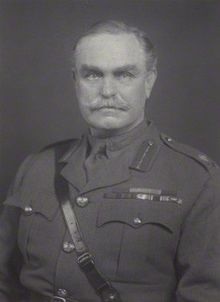
Hugo Douglas De Pree (1870-1943) was a British army officer who had been educated at Eton and the Royal Military College, Woolwich. He was commissioned into the Royal Artillery in 1890 and served on the North West frontier of India in 1897. Promoted to captain in 1900 he fought in the 2nd Boer War in South Africa, volunteering with the Imperial Yeomanry. After serving in World War One he eventually became the Commandant of the Royal Military Academy, Woolwich, until his retirement in 1931.

Major-General Hugo_de_Pree_in_1931
Major-General Hugo De Pree (1870-1943)

In March 1918 Saughton House was put up for sale, but not until any of its salvageable contents had been removed. The following month The Scotsman carried an advertisement for the sale of an oak mantelpiece and wood panelling taken from the house. ⁴

It appears that Saughton House remained an empty shell and was eventually demolished (date unknown). It stood on the site of the present-day Broomhouse Primary School.

Notes: –
In 1928 newspapers reported plans to convert Saughton House into a Scottish Chelsea Hospital for disabled ex-servicemen, as a memorial to Earl Haig. ‘There they have a building that had lain derelict until it was in a state of obvious disrepair’. It was hoped that the council might hand over Saughton House if an offer was made through the Haig Fund to take it over and restore it. It is easy to link this property, with it Haig connection, to our house, but there is every likelihood that the stories may have related to Saughton Hall instead. ⁵ 

References: –
¹ Daily Record (2 Feb 1918)
² The Scotsman (2 Feb 1918)
³ The Scotsman (27 Nov 1926)
⁴ The Scotsman (20 Apr 1918)
⁵ Falkirk Herald (15 Feb 1928)

GLYNWOOD HOUSE

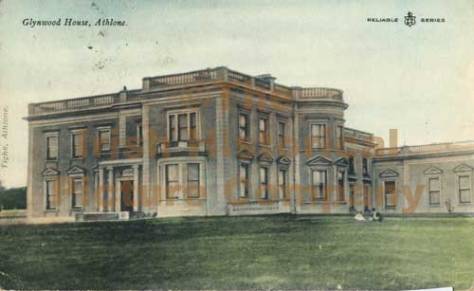
Glynwood House
On 1 February 1918, a few lines in the Belfast News-Letter stated that Glynwood House, Athlone, the family mansion of the Dames-Longworth family, had been destroyed by fire. The newspaper coverage might not have been weighty, but it had a devastating impact on the country house. ¹

In 1837, the Glynwood estate had been described as ‘a large and beautiful seat with extensive premises, having on its eastern, southern and western sides extensive ornamental grounds’. The mansion was constructed in 1790 and rebuilt about 1860 by John Longworth (1798-1881). Around this time the Longworth estate amounted to 3,000 acres in County Galway, as well as land at Roscommon and Westmeath. The family descended from Francis Longworth of Creggan Castle, although the family seat was at Glynwood House. ²

When John Longworth died in 1881 he was succeeded by his cousin, Francis Travers Dames-Longworth (1834-1898). This distinguished character was the second son of Francis Dames-Longworth, Deputy Lieutenant of Greenhill, and educated at Cheltenham and Trinity College, Dublin. He was called to the Irish Bar in 1855, created Queen’s Counsel in Ireland in 1872 and elected Bencher of the King’s Inns in 1876. In a memorable career he was a Commission of the Peace for six Irish counties – Westmeath, Dublin, Donegal, Kildare, King’s County (now Co Offaly) and Roscommon. Two years after inheriting the Longworth estates he was also made Lord-Lieutenant of King’s County. Francis rebuilt Glynwood House between 1883 and 1885 at a cost of £16,482, employing the services of architect George Moyers (1836-1916) with ornate plasterwork completed by J Caird and Co of Glasgow. Glynwood House was a three-storey Italianate house and, in 1887, Moyers returned to make further additions, this time spending £10,702 on building work.

The Dames-Longworths might have thought that their Irish utopia would last forever. However, the death of Francis Travers Dames-Longworth in 1898 was arguably the beginning of Glynwood House’s downfall. His son, Edward Travers Dames-Longworth (1861-1907) was only 37 when he took over the estates. He became Deputy-Lieutenant for Co Westmeath as well as being a JP for Westmeath and Roscommon. But his occupancy lasted just seven years. One Sunday afternoon in March he decided to go for a walk in the grounds of Glynwood House. When it started to rain the household expected him back, but when he hadn’t returned by dinner some uneasiness was felt. After a search of the grounds the police at Creggan were informed and they, in company with servants, continued the search. An examination of the grounds by lantern endured through the stormy night until the body of Edward was found in a little copse in the wood. He was found clutching his pipe and walking stick and had suffered a fatal heart attack. In his will he bequeathed the Clontyglass and Kilheaskin estates and real estate in Co Monaghan to his wife, while the Glynwood estate passed to his son Travers Robert Dames-Longworth, a mere eleven-years-old. ³

Because of his young age, the Glynwood estate was put in the hands of trustees, among whom was Thomas Hassard Montgomery (1872-1953), an agent for the land. Montgomery effectively ran estate affairs while the adolescent Travers completed his education. The young inheritor went to Military College, Sandhurst, in 1914-15, around the same time that Montgomery married his sister, Frances. The outbreak of war saw them both fighting overseas; Travers was a Lieutenant in the Irish Guards while Thomas Montgomery returned as a Lieutenant-Colonel.

It was shortly after Montgomery’s return that Glynwood House was ‘accidentally’ burnt down. The house had been leased, may not even have received its new tenants, and the cause of the fire remains a mystery to this day.

Travers chose to spend time in England while Montgomery, his wife and staff, relocated to Creggan House, also burnt down in 1921 by the Irish Republicans. This forced Thomas Montgomery to leave the Glynwood estate and move to Hampton Hall in Shropshire.

It was the end for the mansion and was left in ruinous condition. The surviving estate was sold to William Nash in 1921 and was largely demolished to supply bricks for local houses, while stone balustrades were cut to ornament their gardens.

Travis Robert Dames-Longworth (1896-1925) became a well-known figure in Cheltenham, famous in sporting circles, and celebrated for being the owner of White Cockade, a famed racehorse. He died in February 1925 at Brockten Hall, Shropshire, aged only 29. Lt-Col Thomas Hassard Montgomery died in 1953, aged 80, at Cadogan House, Shrewsbury. ⁴

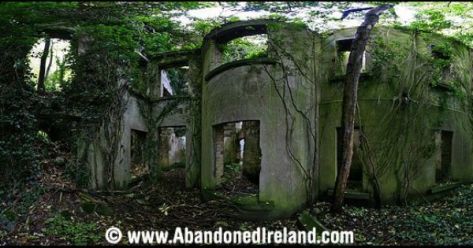
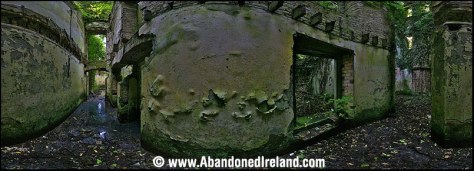
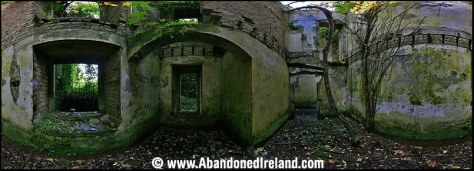
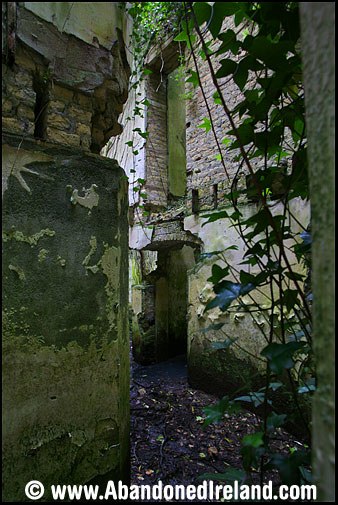
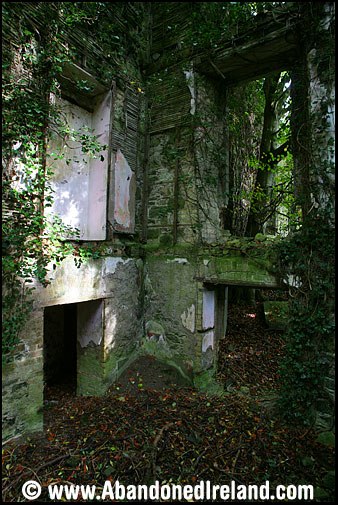
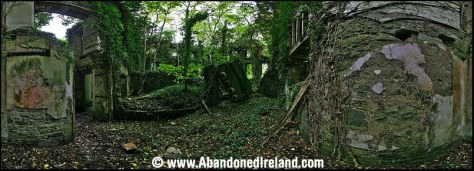
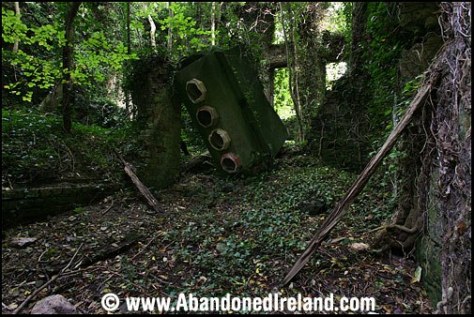
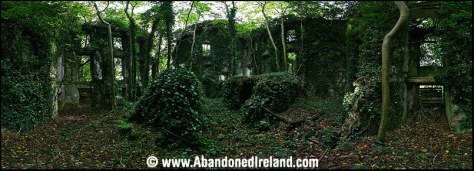
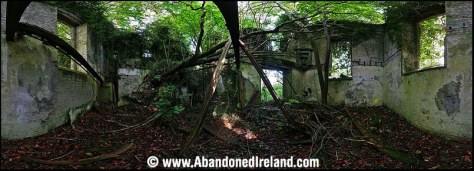
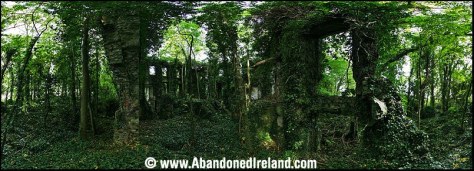
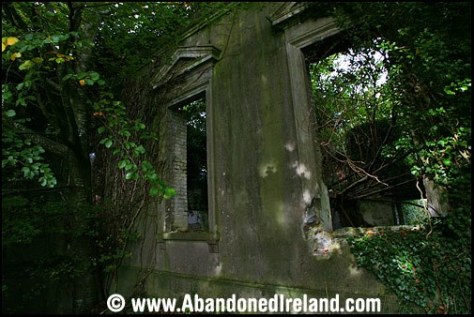
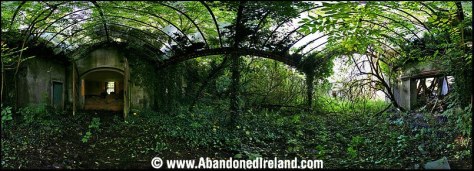
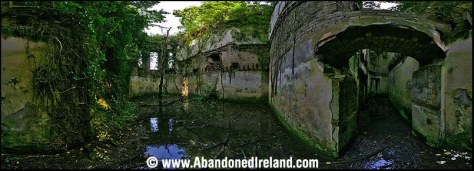
Glynwood House survives as a crumbling shell, its walls reclaimed by nature as each year passes.

Glynwood House (Abandoned Ireland)

Glynwood House 1 (Abandoned Ireland)

Glynwood House 2 (Abandoned Ireland)

Glynwood House 3 (Abandoned Ireland)

Glynwood House 4 (Abandoned Ireland)

Glynwood House 5 (Abandoned Ireland)

Glynwood House 6 (Abandoned Ireland)

Glynwood House 7 (Abandoned Ireland)

Glynwood House 8 (Abandoned Ireland)

Glynwood House 9 (Abandoned Ireland)

Glynwood House 10 (Abandoned Ireland)

Glynwood House 11 (Abandoned Ireland)

Glynwood House 12 (Abandoned Ireland)

References:-
¹ Belfast News-Letter (1 Feb 1918)
² Ballymena Weekly Telegraph (7 Mar 1925)
³ Irish Times (19 Mar 1907)
⁴ Gloucestershire Echo (7 Mar 1925)
Family timeline, thanks to Sally’s Family Place
Images, courtesy of Abandoned Ireland

ARABIN HOUSE

Arabin House 1 (Savills)
The original central entrance, now screened by an extension, has traceried fanlight, pilasters, entablatures and open pediment. (Savills)

In January 2018, Arabin House, a Grade II listed country house set in 11 acres of mature parkland, was valued at £10 million. This house appears to have existed by 1848, underwent extensive alterations and additions during the 19th and early 20th centuries, and was later subdivided. The house stands on what was once the Manor of Woodredon, bought in 1834 by William St. John Arabin and succeeded in 1842 by Richard Arabin (1811-1865), a wealthy landowner, who built Beech House (later renamed Arabin House) at High Beech in 1848. It is attributed to Frederick Octavius Bedford (1784-1858), an English architect better known for his ecclesiastical works, including four Greek Revival churches in South London.

Richard Arabin-by Thomas Richard Williams (NPG)
Richard Arabin (1811-1865). A portrait by Thomas Richard Williams. (National Portrait Gallery)

In 1977 listed building consent was given for major alterations, including the replacement of the old roof with a flat roof. In 1984 the house was split to form two separate dwellings. Beech Hill was created to the west of the three-storey core of the house, and Arabin House was formed from the existing historic central core and later east wing.

Arabin House 2 (Savills)
Arabin House, where Tennyson is said to have stayed with ‘Judge’ Arabin in December 1861. (Savills)

The house today has lost most of its original features and the plan-form has been significantly altered, with most architectural historians agreeing that its current appearance lacks cohesion. It is a far-cry from Bedford’s original design with only the original surround to the front entrance surviving.

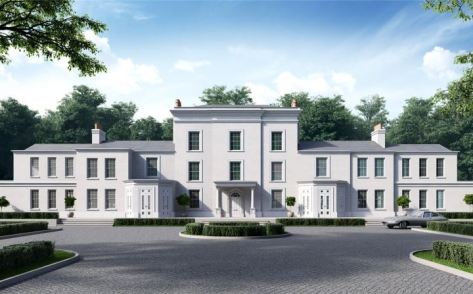
After the death of Richard Arabin the property went through the hands of Arthur John Arrowsmith, Arthur Morrison, Frank Pegler, R.T. Stone and others, right up to the present owner who has been able to reunite the original Arabin estate. Planning permission has been granted to bring together the two houses and once more create a single residential property.

Arabin House 3 (Savills)
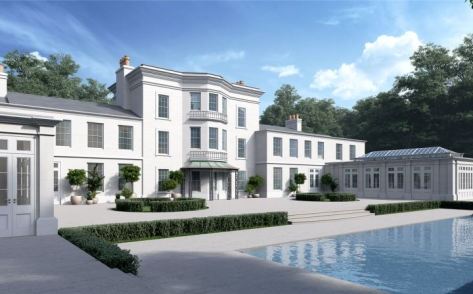
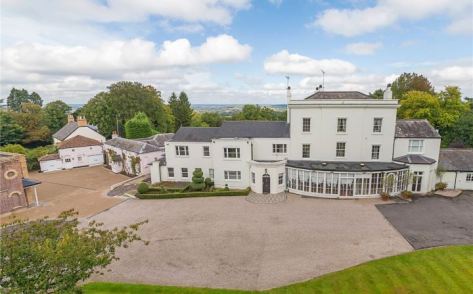
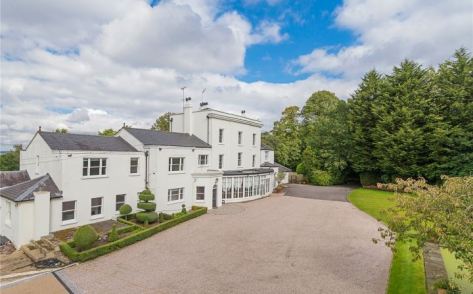
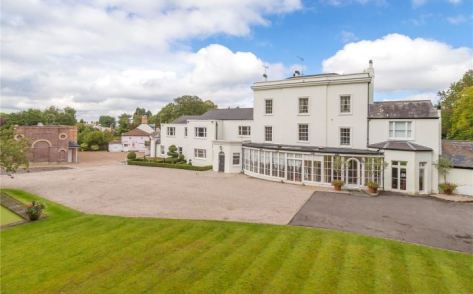
Arabin house is set in about 11 acres of private mature parkland in Epping Forest. It is an elegant white stucco fronted three story home. (Savills)
Arabin House 4 (Savills)
Arabin House used to be called Beech House, Today it is split into two properties – Beech Hill and Arabin House. (Savills)
Arabin House 6 (Savills)
Planning permission has been granted to bring together the two houses to create an elegant home with bespoke modern luxury. (Savills)

References: –
Arabin House Heritage Statement – April 2015 (Built Heritage Consultancy)

HAWARDEN CASTLE

Hawarden Castle 2 (RCAHMW)
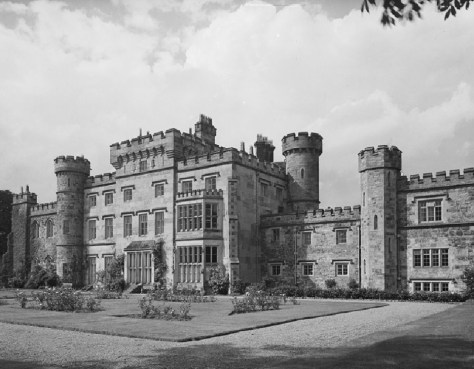
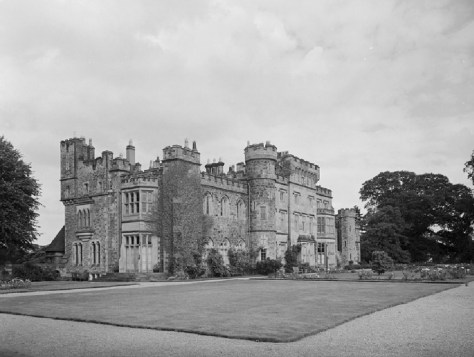
The core of present house is formed by a mansion built in 1752–57 for Sir John Glynne, 6th baronet, to the designs of Samuel Turner, the elder, of Whitchurch. It replaced the 16th century Broadlane Hall, the seat of the Ravenscroft family, which stood some way to the south. (RCAHMW)

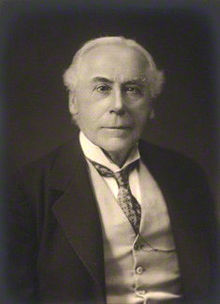
Hawarden Castle, was the estate of the former Prime Minister William Ewart Gladstone (1809-1898), having previously belonged to his wife, Catherine Glynne. It was built in 1752-57 for Sir John Glynne, 6th Baronet, to the designs of Samuel Turner. When W.E. Gladstone died in 1898 it passed to his grandson, William Glynne Charles Gladstone (son of W. E. Gladstone’s eldest son, William Henry Gladstone, who had died in 1891). After he was killed in the First World War the estate was purchased by his uncle Henry Neville Gladstone, later to become 1st Baron Gladstone of Hawarden.

220px-Portrait_of_William_Gladstone
William Ewart Gladstone was a British statesman of the Liberal Party. In a career lasting over 60 years, he served for 12 years as Prime Minister , spread over four terms beginning in 1868 and ending in 1894.

In January 1918 the house was at the centre of this vast Flintshire estate. However, 100 years later we can see that all was not well. Hawarden provided an interesting model that would prove to be the downfall of many country estates during and after the First World War.

In a letter to tenants, Mr Henry Neville Gladstone (1852-1935), pictured below, explained of the trustees’ decision to offer considerable portions of the Hawarden estates for sale. It aroused considerable interest in Flintshire and no little regret among the tenants. ¹

Mr Gladstone explained at some length the circumstances under which the course taken was decided upon.

Mineral revenues had come to an end about ten years previous, and estate affairs were now mainly based on agriculture. Recent Acts of Parliament had imposed a system of valuations and rates of duty on agricultural properties which had made it impossible to continue the management of estates. Deducting the charges of taxes, rates, tithe, maintenance, upkeep, and other outgoings, the income at the disposal of Mr William Glynne Charles Gladstone (1885-1915), the grandson of of former Prime Minster, William E Gladstone, for his personal use, and for the payment of annuities charged on the estates, had amounted to something less than one-fifth of the gross revenue.

Then came the war, and the young squire was killed in action near Laventie. The financial consequences to the estates were simply told. War taxation on income derived from the estates already amounted to nearly four times the annual charge in 1913-14, and no relief was anticipated in years to come. But the effects of pre-war taxation made the position more formidable. Death duties under the Finance and other Acts had totalled six times the amount chargeable on the death of Mr William Henry Gladstone in 1891. This was a serious financial burden. The margin existing before the war had been swept away, and a serious deficit on the working of the estates had to be faced. This was an impossible position alike for landlord and tenant.

Mr Gladstone added that his nephew and he were anxious to preserve as far as possible the historic associations of the castle and the traditions of the Glynne and Gladstone connection, and this would only be achieved by a sale of land.

As it was, the actions taken by the trustees did indeed safeguard the future of the grand house.  Hawarden Castle and the remains of the estate are still owned by the Gladstone family today.

¹ The letter was reproduced in the Nantwich Guardian on 22 January 1918.

The_Lord_Gladstone_of_Hawarden_in_1932
Henry Neville Gladstone, 1st Baron Gladstone of Hawarden was a British businessman and politician. He was the third son of Prime Minister William Ewart Gladstone.
Hawarden Castle 3 (RCAHMW)
In the early nineteenth century, Sir Stephen Richard Glynne, 8th Baronet inherited the estate. In 1809 to 1810, he had the house enlarged, and the exterior completely remodelled in a crenellated Gothic Revival style, by the London architect Thomas Cundy the elder, although the Georgian interiors were preserved. (RCAHMW)
Hawarden Castle (Daily Post)
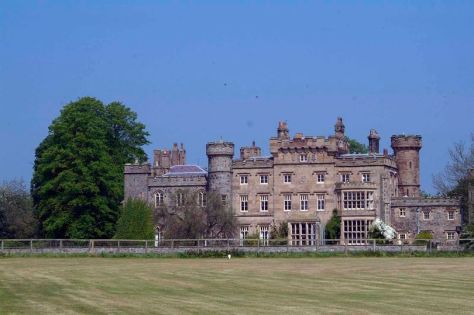
The house is designated as a Grade I listed building by Cadw because of its architecture, especially the 18th century interiors, and for its exceptional importance as the home of W. E. Gladstone. (Daily Post)

ST. NICHOLAS

St Nicholas 1 (KF)
St. Nicholas passed to the James family in the late 19th century. The Honourable Robert James (1873-1960), who laid out the gardens, was in contact with leading horticulturists and garden designers of the day, including Lanning Roper, Lawrence Johnston and many others. (Knight Frank)

St. Nicholas sits on the fringe of the historic market town of Richmond. With elevated  views across the pastures towards the ruins of Easby Abbey and the River Swale its origins date back to 1171 when St. Nicholas was owned by the Crown. It has been remodelled over the centuries and has been in private ownership since around 1585, making it the oldest structure in Richmond in continuous use as a habitation. The property is on the site of a Benedictine hospital, founded in 1171 by one of the Earls of Richmond. There are still graves from the era underneath large parts of the grounds.

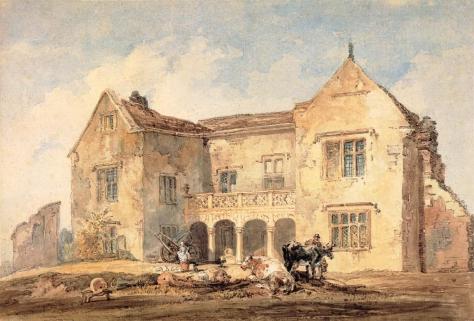
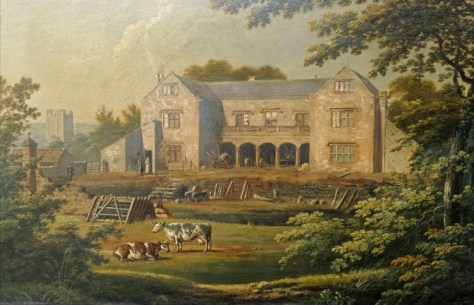
St Nicholas Hospital by Thomas Girtin (Wahoo Art)
St. Nicholas was constructed in the 17th century using materials from the medieval hospital and possibly incorporating part of a 16th century building. It was altered in the early 18th century by Ignatius Bonomi and others. This painting of the hospital is by Thomas Girtin. (Wahoo Art)

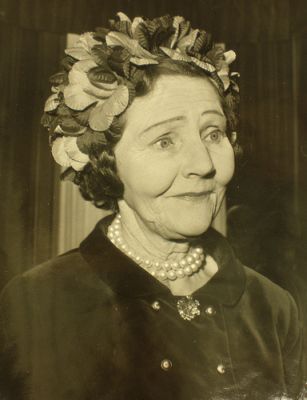
St. Nicholas was the home of much-loved Richmond character Lady Serena James, who lived in the house with her husband, Bobby James, who in 1905 planted the gardens as they currently exist.

She was born Lady Serena Mary Barbara Lumley on March 30 1901, the only child of the 10th Earl of Scarbrough. As an only child, and as a girl, Lady Serena was in a position comparable to that of Vita Sackville-West at Knole; had she been born a boy, she would have been heir to a great inheritance – in her case the medieval Lumley Castle in County Durham and the Palladian Sandbeck Park, near Rotherham in Yorkshire.

Lady Serena James (The Peerage)
A stalwart of North Yorkshire life who for 40 years ran the gardens created by her husband Bobbie James at St Nicholas. (The Peerage)

Her marriage in 1923 to Robert James, third son of the 2nd Lord Northbourne, brought her to the entrancing St Nicholas. The marriage was unexpected: Bobbie James’s first wife Lady Evelyn – nee Wellesley, daughter of the 4th Duke of Wellington – had died young, and he was almost 30 years Lady Serena’s senior. Lady Scarbrough, moreover, was mortified that St Nicholas was not a great country seat. “She’s going to live in a little cottage by the road,” was how she described her daughter’s future.

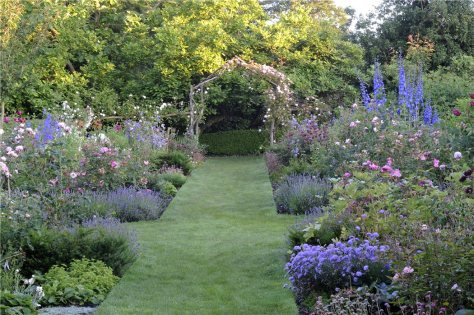
Lady Serena continued to live there after the death of Bobby James. The eponymous “Bobby James” rose still grows throughout the gardens, and on the walls of the house. Richmond residents were welcomed to tour the gardens at any time, and were often invited in for tea. Lady Serena died in 2000, and is still fondly remembered by many in the town.

St Nicholas was then purchased in 2001 by Keith Schellenberg. He is a Yorkshire businessman who made his fortune in shipbuilding, livestock feed, glue, and agricultural chemicals. He was also a sportsman, playing rugby for Middlesbrough and Yorkshire, and was part of the British Olympic bobsleigh team.

St. Nicholas (St. Nicholas Gardens)
St Nicholas is on the site of a Benedictine hospital which was founded before 1171 by one of the earls of Richmond. In 1448 it was granted by Henry VI to William Ayscough who renovated the buildings and founded a chantry chapel on the site. It was dissolved in the 1540s and refounded under Mary c 1553,  but subsequently sold by Elizabeth I in 1585 from which time it has been in private ownership. (St. Nicholas Gardens)
St Nicholas 12 (KF)
In 1813 St. Nicholas was bought by the Marquess of Zetland . After several changes of ownership it passed to the James family in the late 19th century. The Honourable Robert James (1873-1960), who laid out the gardens, was in contact with leading horticulturists and garden designers of the day, including Lanning Roper, Lawrence Johnston and many others. (Knight Frank)